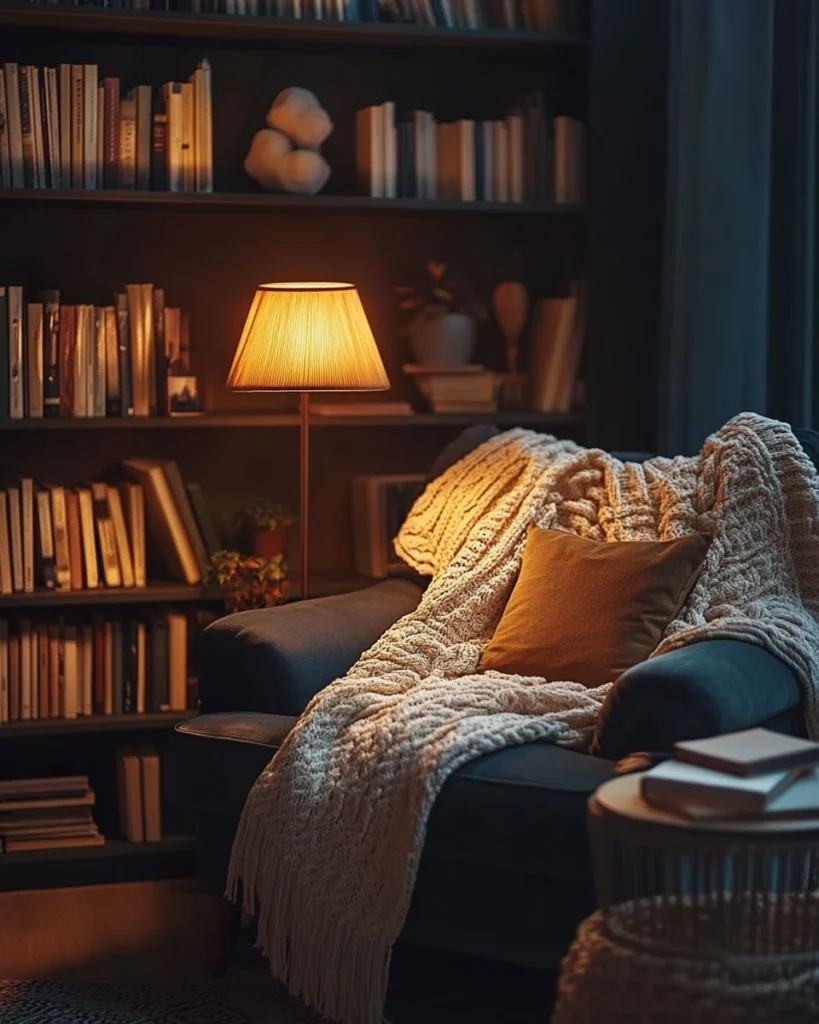
There’s something deeply satisfying about walking into a room that feels like a warm embrace — where the light is low, the shadows are intentional, and the whole space seems to exhale. That’s the promise of moody ambient lighting, and it’s easier to pull off in an apartment than most people think.
You don’t need a renovation or a big budget. You need the right layers, the right fixtures, and a shift in how you think about light — not as something to flood a room with, but as something to sculpt it with.
What Makes Lighting Feel “Moody”
Moody lighting isn’t just dim lighting. Dim lighting without direction looks flat and forgotten. Moody lighting has character — it pools in certain corners, glows from unexpected angles, and creates zones of warmth inside a room.
The key variables are color temperature, light placement, and layering. Warm bulbs (2700K–3000K) are your foundation. Anything cooler starts to feel clinical. And overhead lighting alone — the classic apartment mistake — kills the mood entirely.
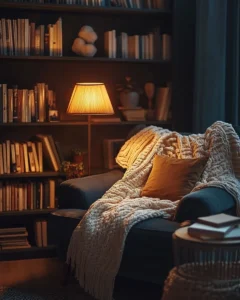
Layer Your Light — Never Rely on One Source
The single most impactful shift you can make is moving away from a single overhead light. Instead, think in three layers:
1. Ambient (base) light — soft, low-level illumination that fills the room without washing it out. Think floor lamps with fabric shades, LED strips behind furniture, or a dimmable overhead on its lowest setting.
2. Accent light — directional light that highlights architecture, artwork, or specific objects. Picture lights above a framed print, a narrow spotlight aimed at a wall niche, or an uplighter tucked behind a couch.
3. Task light — functional but warm. A lamp beside a reading chair, a small desk light with a warm bulb, or under-cabinet lighting in the kitchen that doubles as evening ambiance.
When all three layers are active at once, the room feels intentional and rich rather than exposed.
Fixtures That Create a Moody Effect
Floor Lamps with Opaque or Dark Shades
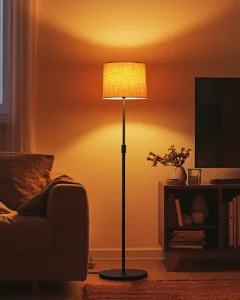
Floor lamps aren’t all created equal. A lamp with a white or light-colored shade throws light widely and evenly — great for brightness, bad for mood. Lamps with darker, opaque shades, drum shades in charcoal or rust, or rattan-weave shades that filter light into patterns create warmth and a sense of enclosure.
Position floor lamps in corners or beside seating to anchor zones of light within the room.
Edison and Filament Bulbs
The visual warmth of a visible filament is hard to beat. Edison bulbs — whether in a pendant cluster, a bedside lamp, or a bare-bulb wall sconce — add texture to light itself. The glow is amber, slightly imperfect, and unmistakably cozy.
Use them in fixtures where the bulb is visible. In enclosed shades, you lose the effect.
LED Strip Lights (Done Right)
LED strips have a reputation for looking cheap, and when used wrong, they do. The trick is indirect placement — behind a floating shelf, under a bed frame, behind a TV, or along the top of kitchen cabinets facing up toward the ceiling. You should see the glow, not the strip itself.
Stick to warm white or amber tones. RGB color-changing strips can work for accent effects but easily tip into gimmicky territory.
Color Choices That Amplify Moody Lighting
Lighting and wall color are inseparable. Light reflects off walls, and the color of your walls determines how your lighting feels.
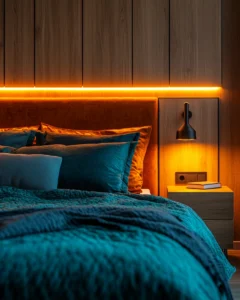
Pale walls bounce light and make rooms feel brighter — which works against a moody aesthetic. Deeper wall tones absorb light and create a sense of intimacy. You don’t need to paint every wall dark. A single dark accent wall behind a sofa or a bed transforms how light behaves in the entire room.
Colors that work best with warm ambient lighting:
- Deep terracotta and burnt sienna
- Warm charcoal and slate
- Forest green and hunter green
- Dusty mauve and wine
- Navy and dark teal
Matte finishes absorb light softly. Satin and gloss reflect it. For a moody feel, matte is almost always the better choice.
Candles and Flame-Effect Lighting
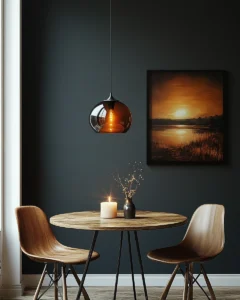
Nothing is more atmospheric than actual fire. A grouping of pillar candles on a coffee table, taper candles in mismatched holders on a shelf, or a cluster of votives along a windowsill costs almost nothing and creates a warmth that no electric fixture can perfectly replicate.
For a low-maintenance version, flame-effect LED candles have come a long way. The flicker algorithms on better models are convincing enough to pass at a glance, and they’re completely safe for small apartments.
Wax warmers and oil diffusers with a subtle glow also serve double duty — ambient light and scent layered together.
Smart Dimmers: The Overlooked Game-Changer
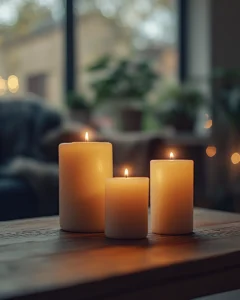
If your apartment allows it, smart dimmers are one of the highest-value upgrades you can make for ambient lighting control. Being able to drop every light in the room to 20% at 9pm without touching individual lamps changes how you inhabit the space.
Plug-in smart dimmers work with most table and floor lamps without any wiring. Pair them with a smart home routine — “Evening Mode” that automatically dims everything at sunset — and the transition from day to night becomes effortless.
Brands like Lutron Caséta, Kasa, and Govee all offer affordable options that work with voice assistants and app control.
Bedroom Lighting for a Moody, Restful Feel
The bedroom is where moody lighting earns its keep most completely. The goal here is to eliminate harsh overhead light after sundown entirely.
Replace your overhead light habit with a pair of matching bedside lamps on warm bulbs. Add a low-wattage nightlight behind the dresser or inside a closet for a soft glow that lets you navigate the room without turning anything harsh on.
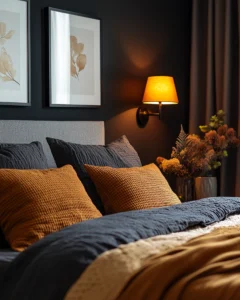
Wall sconces — plug-in versions require no electrician — work beautifully as bedside lighting because they free up surface space and position light at eye level, which is inherently more flattering and calming than light from above.
Living Room Zones and Light Anchoring
In an open-plan apartment living room, lighting does the architectural work that walls can’t. You can define a reading nook, a conversation area, and a media zone purely through where you place light.
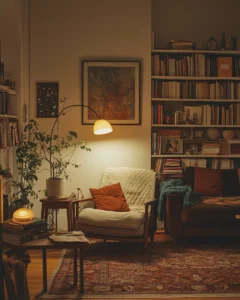
A tall arc lamp over a chair creates a reading nook. A pair of table lamps flanking a sofa anchors the seating zone. A low-slung pendant over a coffee table (in apartments with high enough ceilings) draws the eye downward and inward, making the space feel smaller and cozier on purpose.
The goal isn’t to light the whole room evenly — it’s to light the zones where you actually spend time, and let the edges fade into pleasant shadow.
Final Thought: Commit to the Dark
The biggest barrier to moody apartment lighting is the instinct to see everything. Brightness feels safe. But a room where every corner is lit equally is a room without soul.
Moody lighting asks you to embrace shadow as a design element — to let certain corners breathe in darkness, to let warm pools of light do the storytelling. Start with one lamp in a dark corner and a dimmer on your main overhead. That alone will change the room.
The mood you’re chasing isn’t about what you add. It’s about what you let recede.
