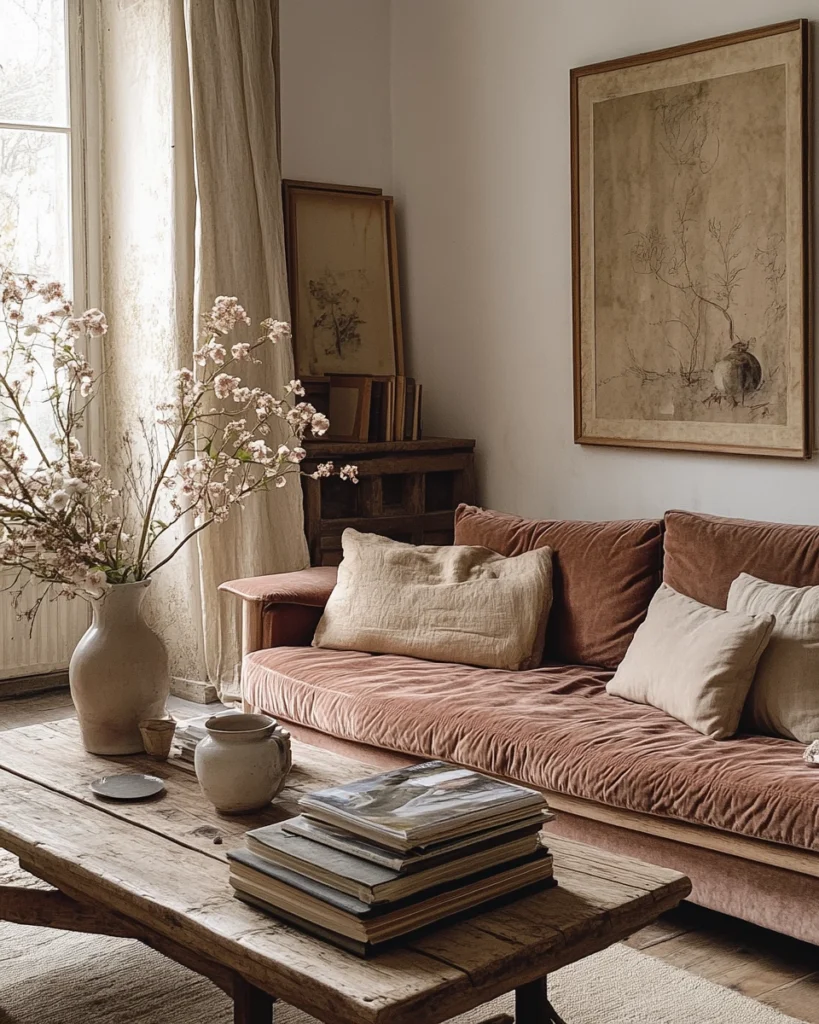
There’s something undeniably magnetic about European apartments — the kind you scroll past on Pinterest and immediately save, wondering why your own space doesn’t feel quite like that. Soft, lived-in, layered with character. The good news? This aesthetic isn’t reserved for Parisian flats or Roman studios. You can recreate it wherever you are.
The soft European apartment aesthetic is all about warmth, restraint, and a deeply personal sense of curation. It’s not stark minimalism, and it’s not maximalist chaos — it’s that sweet spot where every object feels chosen and every corner feels inviting.
What Defines the Soft European Apartment Look
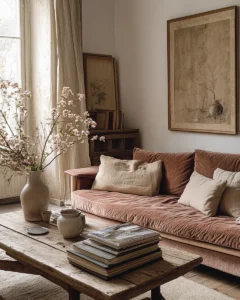
At its core, this aesthetic leans into age, texture, and quiet elegance. Think chalky walls in warm whites or aged creams rather than stark, cold white. Think furniture that looks like it has a story — a slightly scuffed armoire, a linen sofa that’s been sat in a thousand times, a ceramic lamp you’d find at an antique market.
Key defining traits include:
- Muted, warm color palettes — dusty rose, sage, terracotta, warm taupe, antique white
- Natural materials — linen, aged wood, stone, rattan, worn leather
- Imperfect surfaces — flaking plaster, raw stone, vintage parquet floors
- Layered textiles — throws draped casually, mismatched cushions, curtains pooling slightly on the floor
- Art everywhere — not gallery-hung with precision, but leaned against walls, stacked, overlapping
It’s an aesthetic that prioritizes feeling over perfection.
The Walls: Where the Mood Starts
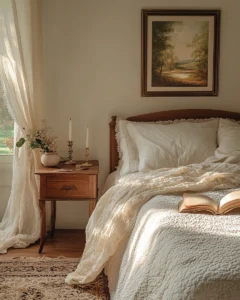
If your walls are bright white and perfectly smooth, you’re already a few steps away from that European softness. The palette to work toward: warm plaster tones, dusty clay, aged linen, or muted sage.
Paint Choices That Work
Look for flat or matte finishes — they absorb light differently than satin paints and instantly make a room feel more like an old European home. Brands like Farrow & Ball, Little Greene, or even affordable dupes in these shades will transform a space completely.
Popular tones to try:
- Lime White or Strong White (Farrow & Ball) for a warm, aged look
- Clay or terracotta as an accent wall
- Sage green for a kitchen or dining room
- Dusty mauve for bedrooms
Don’t Fix Every Imperfection
One of the most counterintuitive things about this aesthetic: small cracks, slight unevenness, or textured plaster walls are assets, not problems. If you’re renovating, consider a limewash or Venetian plaster finish to add organic texture.
Furniture: Lived-In and Layered
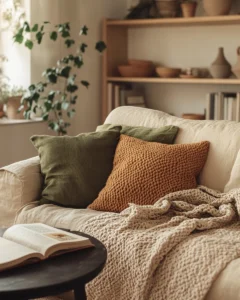
The furniture in a soft European apartment doesn’t look like it was bought all at once from the same store. It looks collected — some inherited, some found at markets, some carefully chosen over years.
What to Look For
Sofas and chairs: Linen, worn velvet, or washed cotton slipcovers in muted tones. Avoid anything overly structured or modern. Look for deep seats, curved arms, slightly oversized proportions.
Tables: Aged wood, stone tops, or iron-based pieces. Round tables tend to feel more European and sociable than rectangular ones in smaller rooms.
Storage: Open shelving rather than closed cabinets where possible. A vintage armoire. Wicker baskets. Exposed books and ceramics on floating shelves.
Mix Eras Deliberately
A mid-century chair paired with a Victorian side table and modern ceramic lamp is the sweet spot. Matching sets feel too showroom; mixed eras feel like a curated life.
Textiles: Where the Softness Lives
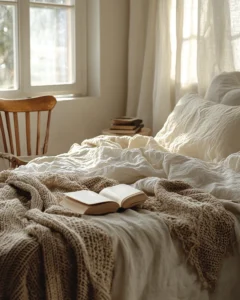
Textiles are arguably the fastest way to shift the feel of a room. Europeans tend to layer rather than match — different textures, complementary but not identical tones, nothing too coordinated.
The Linen Rule
Linen is the cornerstone fabric of this aesthetic. Linen curtains (floor-to-ceiling if possible, even in small rooms), linen bedding, linen throw cushions. It wrinkles beautifully, softens over time, and has a natural, undone quality that no other fabric replicates.
Layering Textiles the European Way
- Start with a neutral base (white or warm grey linen)
- Add a medium-toned throw — sage, dusty olive, warm rust
- Layer in cushions in varied textures — bouclé, velvet, cotton, wool
- Let curtains touch the floor slightly — a little pooling looks intentional and luxe
- Add a vintage or woven rug that grounds the space with pattern and warmth
Styling Details That Make It Feel Authentic
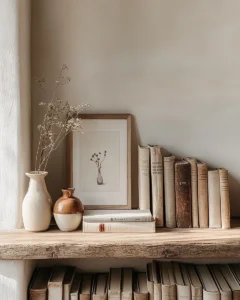
The difference between a room that looks “inspired by” and one that genuinely embodies the soft European look is in the details. Here’s where the magic happens.
Art Leaning, Not Hanging
Lean art against walls, on shelves, on the floor behind furniture. Mix framed prints, oil paintings, and unframed canvases. Stacking two or three pieces at different heights creates depth and that effortless collected look.
Books as Decor
Stack them horizontally on shelves and tables. Leave one open on a chair or bedside. European homes often treat books as living decor, not just storage — visible spines, stacked heights, mixed genres.
Ceramics and Imperfect Objects
Seek out handmade ceramics — irregular shapes, slightly uneven glazes, earthy tones. Markets, Etsy, or small local studios are better sources than mass-market homeware stores. The slight imperfection is the point.
Taper Candles and Candleholders
A simple tapered candle in an aged brass or iron holder on a dining table transforms the atmosphere of a room. Even unlit, they add vertical interest and a sense of ritual.
Lighting: Warm and Layered
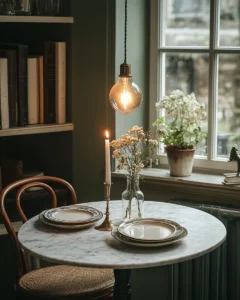
Overhead lighting is rarely used in European homes — or if it is, it’s softened dramatically. The goal is pools of warm, golden light throughout a space rather than one bright ceiling fixture flooding the room.
Lighting Layers to Aim For
- Floor lamps with warm-toned bulbs positioned near seating areas
- Table lamps on side tables, bedside tables, bookshelves
- Pendant lights in dining areas — rattan, aged brass, or ceramic shades
- Candles for evenings — both functional and atmospheric
- Fairy lights used sparingly, draped or placed in glass bottles
Always opt for bulbs in the 2700K–3000K warm white range. Cool light kills the soft European mood instantly.
Bringing It All Together
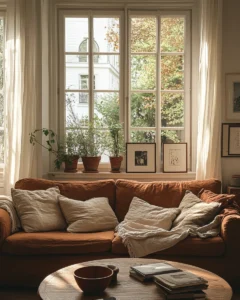
The soft European apartment aesthetic isn’t about buying a specific set of furniture or following a strict formula. It’s about building slowly, choosing things you genuinely love, and letting a space develop its own personality over time.
Start with your walls — warm them up. Invest in linen where you can. Collect art and ceramics that feel meaningful, not just decorative. Let things be slightly imperfect. Light candles in the evening.
The result is a home that doesn’t feel decorated — it feels inhabited. And that’s precisely what makes European apartments so endlessly appealing.
