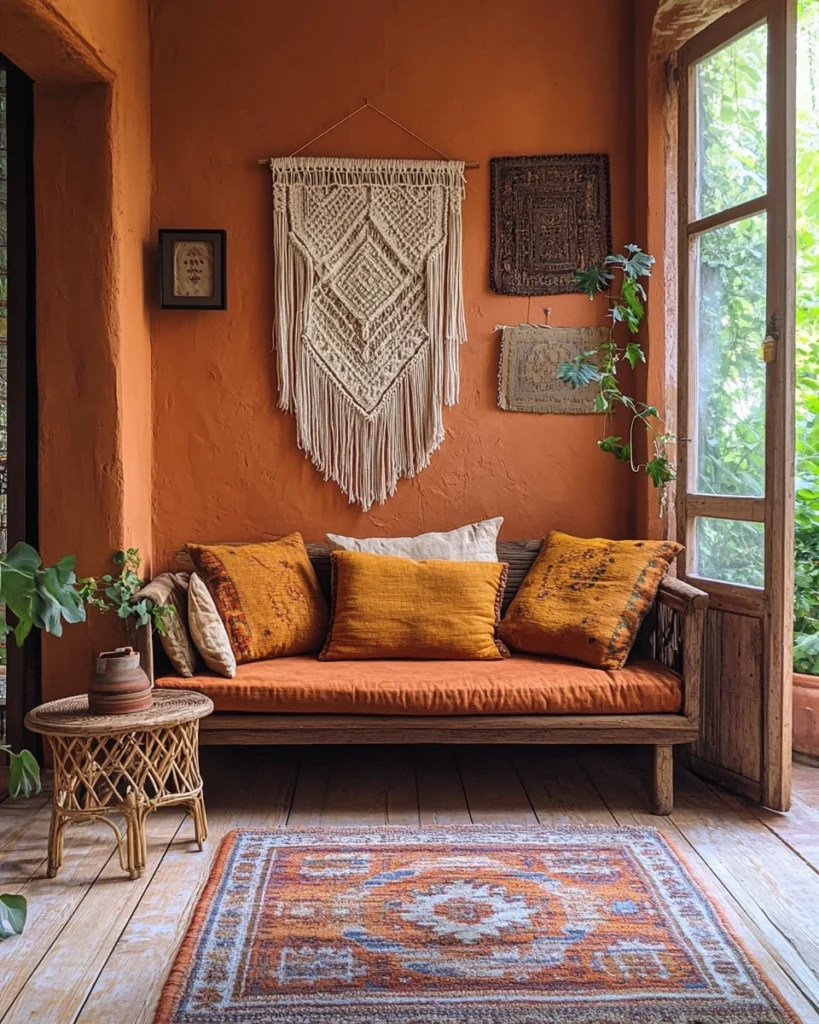
If you’ve been scrolling through interior design feeds lately, you’ve probably noticed one aesthetic that keeps stealing the spotlight — the earthy boho apartment. It’s warm, layered, textured, and completely unapologetic about its love of natural materials. But here’s the thing: you don’t need a sprawling house to pull it off. Even a small apartment can become a rich, soulful bohemian sanctuary when you know which elements to lean into.
This guide walks you through how to style an earthy boho apartment from the ground up — furniture, colors, textiles, and those finishing touches that make a space feel intentional without looking like a showroom.
What Is the Earthy Boho Style?
Before you start shopping, it helps to understand what earthy boho actually means. Bohemian design is rooted in a free-spirited, collected-over-time aesthetic — think globally inspired pieces, handmade textures, and a relaxed approach to color. The earthy modifier narrows the palette to warm, grounded tones: terracotta, rust, deep ochre, warm browns, sandy beige, and forest-influenced greens.
It’s a style that feels traveled, personal, and deeply cozy. Unlike minimalist design that strips rooms bare, earthy boho layers richly — textiles stacked on textiles, artwork clustered on walls, wood mixed with rattan mixed with woven fabric.
Start With the Color Palette
The color palette is the foundation of any earthy boho space. Stick to warm, nature-derived tones that feel grounded rather than cool or sterile.
Your core earthy boho palette:
- Terracotta and clay — the signature of the earthy boho look
- Warm ochre and mustard — adds golden warmth
- Burnt sienna and rust — rich depth without going dark
- Creamy whites and warm beige — the breathing room between bold tones
- Chocolate brown and walnut — for furniture and wooden accents
- Muted sage and olive — earthy without being bright
Avoid cool grays, stark whites, or bright primaries. Those colors fight against the warmth you’re trying to build. Even your neutrals should feel sun-kissed, not sterile.
One practical tip: if you’re renting and can’t paint walls, terracotta and rust tones in rugs, cushions, and curtains will do the heavy lifting. A large rust-colored throw blanket draped over a beige sofa can transform the entire mood of a room.
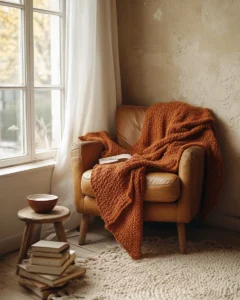
Furniture: Low, Natural, and Collected
Boho furniture has a specific energy — it’s low to the ground, made from natural materials, and looks like it was gathered over years rather than ordered from a single catalog. That intentional mismatch is the point.
Go Low and Relaxed
Floor cushions, low-slung sofas, and platform beds all contribute to the grounded, casual feel. A low wooden coffee table with visible grain surrounded by floor cushions in woven fabric instantly reads as boho. It’s also surprisingly practical in small apartments where low furniture makes rooms feel taller and more open.
Embrace Rattan, Wicker, and Reclaimed Wood
These materials are non-negotiable in earthy boho design. A rattan armchair, a reclaimed wood dining table, or a woven wicker basket used as a side table all add that organic, tactile quality that manufactured furniture simply can’t replicate.
Mix your wood tones — it’s actually encouraged. Light pine next to dark walnut next to weathered oak feels collected and intentional rather than matchy-matchy.
Vintage and Secondhand Finds
Nothing says boho like furniture with a history. Thrift stores, flea markets, and vintage marketplaces are goldmines for exactly the kind of worn-in, character-rich pieces this aesthetic needs. A mid-century wooden dresser, a brass-legged side table, or an embroidered ottoman from a vintage shop will always look more authentic than brand-new alternatives.
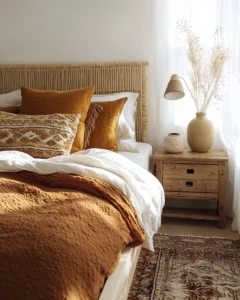
Layer Textiles Like You Mean It
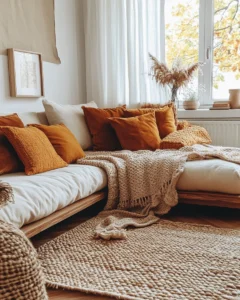
Textiles are where earthy boho apartments really come alive. This is the layer where you get to pile on — and more is genuinely more.
Rugs: The Bigger, the Better
A large, patterned rug is one of the single most transformative purchases for a boho apartment. Look for hand-knotted or flat-weave styles in warm tones — Moroccan, kilim, Turkish, or Persian-inspired patterns all work beautifully. Don’t be afraid of a bold geometric pattern; in earthy tones, it grounds the room rather than overwhelming it.
Layer rugs if your space allows it. A smaller, worn vintage rug placed over a larger sisal or jute base adds depth and that perfectly imperfect boho layering.
Cushions and Throws
Mix cushion textures freely — velvet next to woven cotton next to embroidered linen. Keep colors within your earthy palette but vary the shades and patterns. A rust velvet cushion next to a cream macramé cushion next to a geometric kilim cushion is a classic combination that always works.
Throws should look draped, not folded. Casually toss a chunky knit or a woven cotton throw across the corner of your sofa for that relaxed, lived-in quality.
Window Treatments
Swap out any blinds for flowing curtains in natural fabrics. Linen, cotton gauze, and muslin all filter light beautifully and add movement. For earthy boho, choose curtains in warm cream, terracotta, or dusty rust tones. Floor-length panels that puddle slightly on the floor add that romantic, unhurried quality the style is known for.
Walls: Art, Texture, and Story
Bare walls are the enemy of earthy boho. This style calls for walls that tell a story — gallery arrangements, woven wall hangings, vintage mirrors, and mixed-media artwork all have a role to play.
Create a Gallery Wall
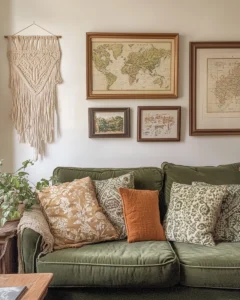
A gallery wall in a boho space works best when it’s intentionally eclectic. Mix sizes, frames, and media — a framed vintage map next to an abstract watercolor next to a black-and-white photograph next to a small woven textile piece. Use warm wood, brass, and terracotta-colored frames to keep everything cohesive without being matchy.
Arrangement tip: lay your pieces on the floor first and photograph the layout before you start hammering. It saves significant wall-patching later.
Macramé and Woven Wall Hangings
A large macramé wall hanging is basically the mascot of boho design — and for good reason. It adds texture, warmth, and artisan quality to any wall. Hang one above a bed as an alternative to a headboard, or use it as a focal point above a sofa.
Mirrors With Character
Vintage mirrors add depth and light to smaller apartments. Look for ornate brass frames, distressed wood frames, or arch-shaped mirrors. A large arched mirror leaning against the wall is particularly effective — it elongates the room and adds a bohemian art piece quality without taking up floor space.
Small Details That Tie It Together
The finishing details are what separate a styled boho apartment from a random collection of brown things.
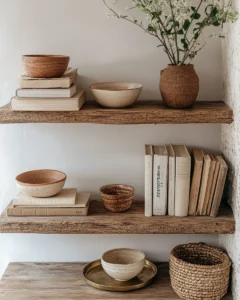
- Ceramic and clay vessels — handmade-looking pottery in earthy tones on shelves or tabletops adds warmth and craft
- Woven baskets — functional storage that doubles as decor; use them for blankets, magazines, or as standalone decorative elements
- Vintage books — stack them, display their spines, or use them as risers for other objects
- Brass and copper accents — lamp bases, small trays, frames, and hardware all read as warm and antique in the best way
- Natural fiber storage — seagrass, water hyacinth, and rattan baskets add texture while keeping clutter organized
Making It Work in a Small Apartment
Small apartments can actually feel more boho than large ones — the layering creates coziness rather than clutter when done with intention.
A few key rules for small spaces:
- Use vertical space — tall bookshelves, floor-to-ceiling curtains, and stacked artwork draw the eye upward
- Choose multifunctional pieces — a rattan storage ottoman works as a coffee table, extra seating, and hidden storage
- Keep the floor partially visible — especially with rugs, let the edges of the floor breathe so the room doesn’t feel cramped
- Edit ruthlessly — boho is layered, but it isn’t cluttered. Every piece should feel intentional
Conclusion
An earthy boho apartment isn’t built in a weekend — it’s assembled over time, with pieces that have meaning, texture, and character. Start with the color palette and one anchor piece of furniture. Add textiles. Build the walls. Layer in the small details.
The beauty of this aesthetic is that it grows with you. Every thrifted find, every handmade ceramic, every vintage mirror adds another chapter to a space that feels genuinely, authentically yours.
