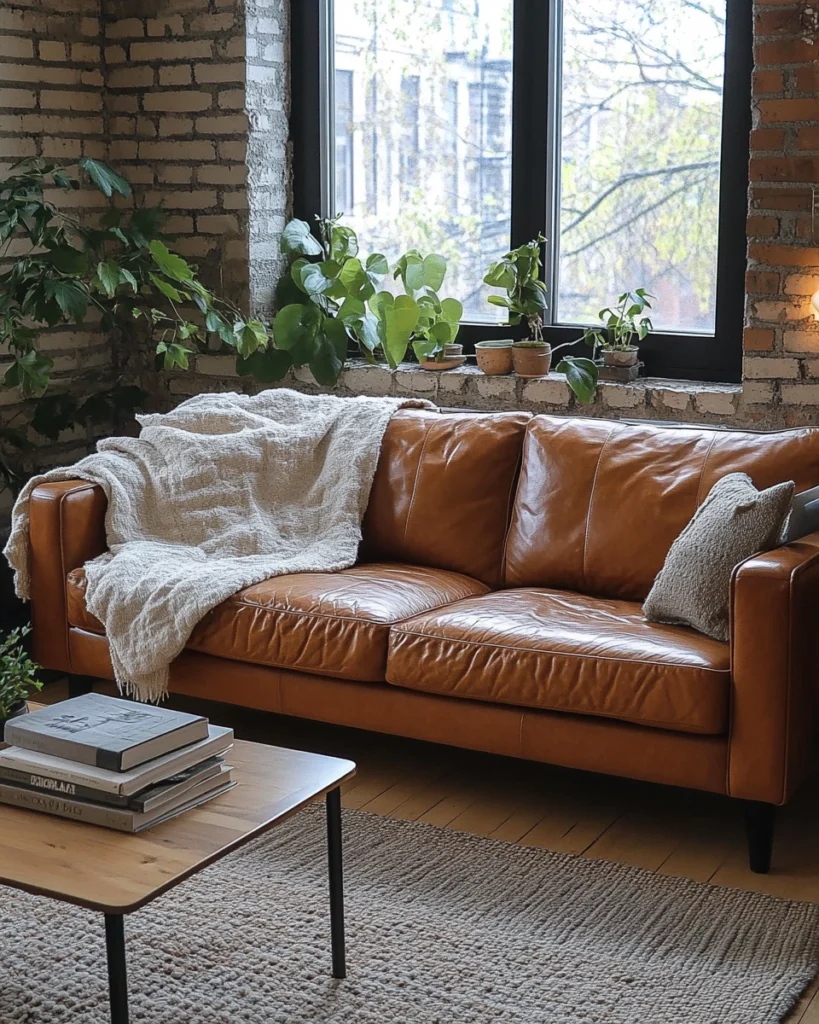
The brown leather sofa is one of the most timeless, versatile pieces you can anchor an apartment around — if you know how to style it right.
Too many people buy a stunning brown leather sofa, place it in their living room, and then feel stuck. The rest of the space doesn’t quite click. The sofa feels heavy, the room looks dated, or everything just feels a little too “man cave.” The good news? Brown leather works beautifully in apartments of all sizes and styles — you just need to pair it with the right elements.
Here’s how to style a brown leather sofa in an apartment so it feels intentional, layered, and genuinely livable.
Why Brown Leather Is Actually a Design Asset
Brown leather has a reputation problem. People assume it’s hard to work with, too traditional, or only for rustic cabins. In reality, it’s one of the most forgiving furniture pieces you can own.
Leather ages beautifully — it develops character over time, not wear. And brown, depending on its undertone (warm cognac, cool espresso, or rich tobacco), can work in modern, industrial, mid-century, and even transitional apartment styles.
The trick is to stop treating it like a challenge and start treating it like the anchor it is.
Choose the Right Color Palette to Work With Brown
Brown is a neutral — but it’s a warm neutral, which means you need to be intentional about the colors you surround it with.
Warm Earthy Tones
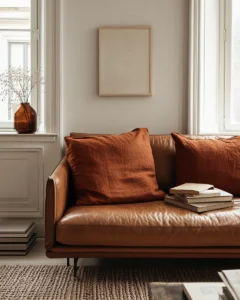
Pair your sofa with terracotta, burnt orange, mustard yellow, and rust. These colors don’t compete with brown — they enhance it. Think rust-colored cushion covers, a mustard yellow throw, or a terracotta-toned area rug. This palette feels grounded, cozy, and visually cohesive.
Cream and Off-White
If you want a lighter, airier feel, cream and off-white walls with linen-textured cushions balance out the weight of a brown leather sofa beautifully. This works especially well in small apartments where you want to maintain a sense of openness without the sofa dominating the space.
Deep Navy or Forest Green
For a more sophisticated, editorial look, pair brown leather with deep navy or forest green. These dark tones create high contrast and make the sofa feel intentional rather than default. A navy area rug or a set of dark green linen cushions can completely transform how the sofa reads in the room.
Layer Textures to Soften the Leather
Leather has a hard, smooth surface. Left alone, it can make a room feel cold or sterile even when the color is warm. The solution is to layer textures strategically around and on the sofa.
Cushions Are Your Best Tool
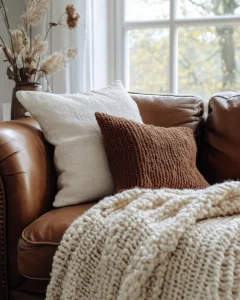
Mix at least three cushion textures: a chunky knit, a woven cotton or linen, and a velvet or suede. Keep the sizes varied — a couple of large 20×20 cushions and one or two smaller lumbar pillows. Avoid matching sets. The goal is layered, collected-over-time styling, not a showroom display.
Good cushion colors for a brown leather sofa:
- Deep rust or terracotta
- Ivory or warm white
- Olive green
- Caramel or tan
- Dusty blue or slate
Throws Add Life
A throw blanket draped casually over one arm or folded across the seat changes everything. Go for a wool, chunky knit, or textured cotton throw. Avoid anything too synthetic or shiny — it clashes with the richness of leather. Earth tones, oatmeal, or even a subtle plaid all work well.
Rug Selection: The Make-or-Break Element
The rug you choose under a brown leather sofa will either tie the whole room together or create visual chaos. This is one of the most important styling decisions you’ll make.
Go for Texture Over Pattern (Usually)
A jute, sisal, or chunky wool rug adds texture without competing with the strong visual presence of the sofa. Neutral braided jute is a classic pairing that works across almost every apartment style.
When to Use a Patterned Rug
A low-key geometric or abstract rug can work well if your walls and other furniture are fairly neutral. Avoid anything too busy or colorful — the sofa is already doing visual work. Let the rug support, not compete.
Size Matters in Small Apartments
In an apartment, always go bigger than you think you need. A rug that’s too small makes a room feel choppy and disconnected. Ideally, your sofa’s front legs should rest on the rug. If budget is a concern, layer a smaller decorative rug over a larger neutral base rug.
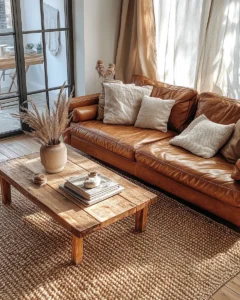
Coffee Table Choices That Complement Brown Leather
Your coffee table is the sofa’s closest neighbor — it has to work with it, not against it.
Wood Coffee Tables
Dark walnut or warm oak works beautifully with brown leather. The natural grain of wood echoes the organic quality of leather. Go for simple silhouettes — a rectangular wooden coffee table with clean lines keeps the look modern without erasing warmth.
Metal and Glass
For a more industrial or contemporary apartment, a metal-framed coffee table (matte black or brushed brass) adds contrast and keeps the space from feeling too heavy. A smoked glass top lightens things visually while still feeling elevated.
Avoid Matching Brown
One common mistake: pairing a brown leather sofa with a dark brown coffee table. Unless you’re going intentionally moody and tonal, this can feel flat. Introduce contrast — either through lighter wood tones, metal, or a combination.
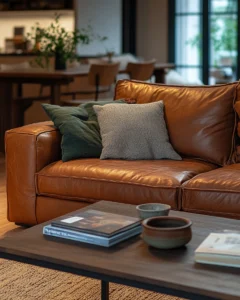
Wall Decor and Art That Works
The wall behind and around a brown leather sofa is prime real estate. How you handle it shapes the entire mood of the space.
Gallery Walls
A gallery wall above or beside the sofa works especially well with brown leather because it adds visual interest and personality without adding physical clutter. Mix framed art prints, photographs, and small mirrors. Go for wooden frames or simple black frames — both complement leather well.
Large-Scale Art
If you prefer a cleaner look, a single large-scale art print or painting does the heavy lifting. Abstract art in warm ochre, rust, or deep blue tones coordinates beautifully. Dark abstract prints also work well against lighter walls if you want more contrast.
Mirrors
A large mirror placed beside or above the sofa bounces light around the apartment and makes the space feel larger. Arched mirrors, ornate gold or brass frames, and oversized rectangular mirrors all pair well with brown leather aesthetics.
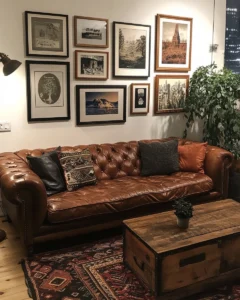
Lighting That Enhances the Leather
Brown leather looks best in warm lighting. Avoid harsh white overhead lighting — it flattens the richness of the material and makes it look dull.
Floor Lamps
A tall arc floor lamp positioned behind one end of the sofa creates soft ambient light and adds visual height to the seating area. Warm-toned bulbs (2700K–3000K) are essential.
Table Lamps on Side Tables
If space allows, a side table with a warm table lamp on one or both ends of the sofa completes the setup. This creates layered lighting at multiple heights, which is the key to making any room feel cozy and intentional.
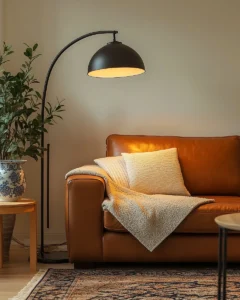
Small Apartment Tips for Brown Leather Sofas
If you’re working with limited square footage, the brown leather sofa can still shine — you just need to apply a few extra strategies.
- Choose a two-seater or apartment-sized sofa if a full three-seater overwhelms the room
- Keep surrounding furniture lighter in color and visual weight — white or natural wood pieces prevent the room from feeling crowded
- Elevate the sofa on legs — sofas with visible legs feel less heavy than those that sit flush to the floor
- Use a large rug to define the zone — it gives the sofa its own visual “room” within the open floor plan
- Keep the wall behind the sofa relatively simple — one or two pieces of art rather than a full gallery wall works better in tight spaces
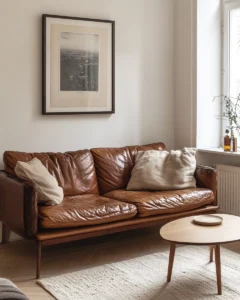
Conclusion: Own the Brown Leather
A brown leather sofa isn’t a default choice — it’s a design statement when styled with intention. The key is to treat it as your anchor and build outward from it: warm color palettes, layered textures, the right rug, considered lighting, and wall decor that adds personality without chaos.
Whether your apartment is modern, industrial, mid-century, or eclectic, brown leather can work — and work beautifully. Stop hiding it under neutral cushions and start letting it do what it was built to do: ground the room and age gracefully.
Style it right, and that sofa becomes the best decision you ever made for your apartment.
