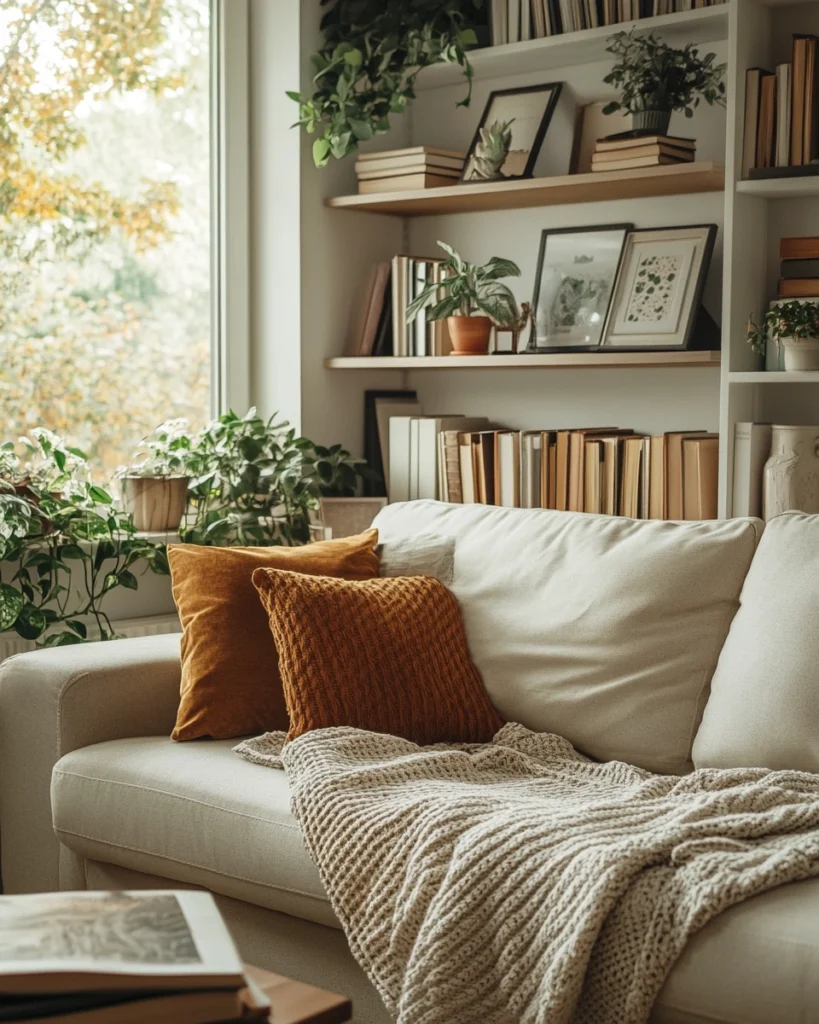
Living in a small apartment doesn’t mean you have to feel cramped, cluttered, or constantly stepping over things. With the right design moves, even the tiniest studio can feel airy, functional, and surprisingly spacious. The secret isn’t magic — it’s strategy. From furniture choices to color palettes to lighting tricks, here’s everything you need to transform your compact space into a place that genuinely feels bigger than it is.
Use Light Colors to Open Up the Room
Color is one of the fastest and most affordable ways to visually expand a small space. Light, soft tones reflect natural light and make walls feel farther apart than they actually are.
The Best Colors for Small Spaces
- Whites and off-whites — classic choices that bounce light beautifully
- Soft sage green — adds warmth without darkening the room
- Pale blue and sky tones — create a calm, open atmosphere
- Warm beige and greige — versatile and cozy without feeling heavy
Avoid painting every wall in a deep, saturated color. If you love bold tones, limit them to one accent wall or use them in textiles like cushions and rugs instead.
Choose Furniture That Works Harder
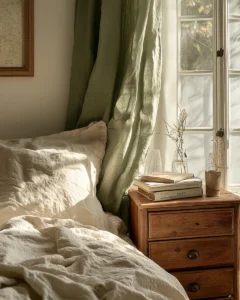
In a small apartment, every piece of furniture needs to earn its spot. Oversized, single-purpose furniture is the enemy of small spaces. Instead, think multi-functional and appropriately scaled.
Smart Furniture Swaps to Make
- Sofa bed or daybed instead of a standard sofa in studio apartments
- Ottoman with storage that doubles as a coffee table
- Nesting tables that tuck away when not in use
- Murphy bed or loft bed to free up floor space in the bedroom
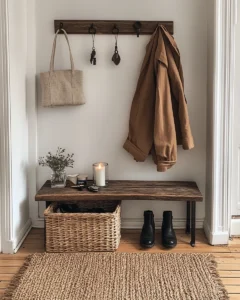
- Bench with storage at the entryway instead of a bulky console table
Go for furniture with legs rather than pieces that sit flush to the floor. Exposed legs create visual breathing room and make the entire room feel lighter and less heavy.
Maximize Vertical Space
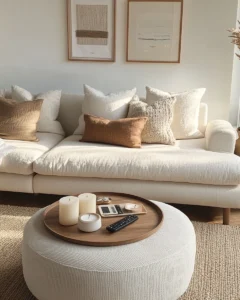
When floor space is limited, the solution is to go up. Vertical space is one of the most underused assets in small apartments, and tapping into it can dramatically change how a room feels.
Vertical Storage Ideas
- Floor-to-ceiling shelving draws the eye upward and provides massive storage
- Tall, narrow bookshelves instead of wide, low ones
- Wall-mounted cabinets in the kitchen and bathroom to free up countertops
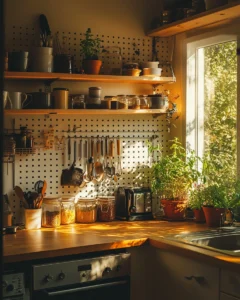
- Hooks and pegboards on walls for coats, bags, and kitchen tools
- Hanging plants to add greenery without taking up surface space
When your shelves and decor guide the eye upward, ceilings feel higher and rooms feel taller — even if nothing actually changed.
Mirrors: The Oldest Trick in the Book
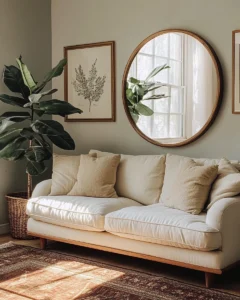
There’s a reason designers have been using mirrors for centuries — they work. Placing mirrors strategically can visually double the size of a room by reflecting light and creating the illusion of depth.
Where to Place Mirrors for Maximum Effect
- Opposite a window to bounce natural light across the room
- Behind a sofa to add depth to a living area
- Full-length mirrors leaning against a wall in the bedroom
- Mirrored furniture like side tables or cabinet fronts for subtle reflection
Don’t limit yourself to one small mirror on a single wall. A large statement mirror or a grouping of smaller ones creates far more impact.
Control the Clutter with Smart Organization
Clutter is the single biggest enemy of a small space. Even a well-designed room will feel chaotic and cramped if surfaces are overloaded. The goal isn’t minimalism — it’s intentional organization.
Clutter-Control Strategies That Actually Work
- Baskets and bins that hide things without looking messy
- Under-bed storage for seasonal items and extra bedding
- Door organizers for the back of closet and bathroom doors
- Drawer dividers to keep junk drawers from becoming chaotic
- A dedicated drop zone near the entrance to catch keys, bags, and mail
The rule of thumb: every item in your home should have a home. When things don’t have a place, they pile up on surfaces — and that’s when small spaces start to feel suffocating.
Use Rugs to Define Zones
In open-plan apartments or studios, rugs are your best friend. A well-placed rug visually separates different areas — like the living space from the sleeping area — without needing walls or partitions.
This zoning technique makes a single room feel like multiple distinct spaces, which actually tricks the eye into perceiving the apartment as larger and more organized.
Rug Tips for Small Spaces
- Choose the right size — a rug that’s too small makes the room feel disconnected
- Keep patterns low-key — large, bold patterns can overwhelm a small floor area
- Layer rugs for a cozy, eclectic look that adds depth
- Light-colored rugs expand the visual floor space
Let in as Much Natural Light as Possible
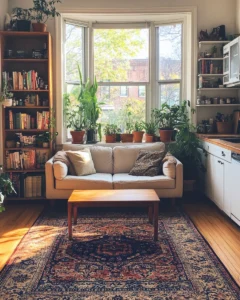
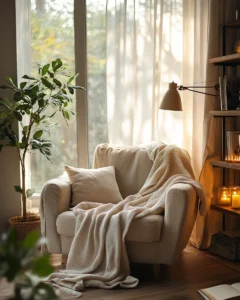
Light is the single most powerful tool you have in a small apartment. The more natural light a room gets, the larger and more open it feels. Dark corners and heavy window treatments can make even a decent-sized room feel like a closet.
Light-Maximizing Tips
- Swap heavy curtains for sheer linen panels or Roman shades
- Keep windowsills clear of clutter that blocks light
- Use light-filtering blinds instead of blackout curtains in living areas
- Add warm LED lighting in corners and under cabinets for depth
- Layer your lighting — ceiling light, floor lamp, and table lamp together create a spacious, lived-in glow
Avoid relying solely on a single overhead light. Multiple light sources at different heights create dimension and warmth that makes a room feel more expansive.
Conclusion: Small Space, Big Impact
The key to making a small apartment feel bigger isn’t about spending a fortune or doing a full renovation. It’s about being intentional — choosing furniture that multitasks, letting light flow freely, using color and mirrors strategically, and keeping clutter under control.
Start with one or two changes and build from there. Even swapping out heavy curtains for sheers or adding a large mirror can completely shift how your apartment feels. Small spaces have enormous potential — you just have to know how to unlock it.
