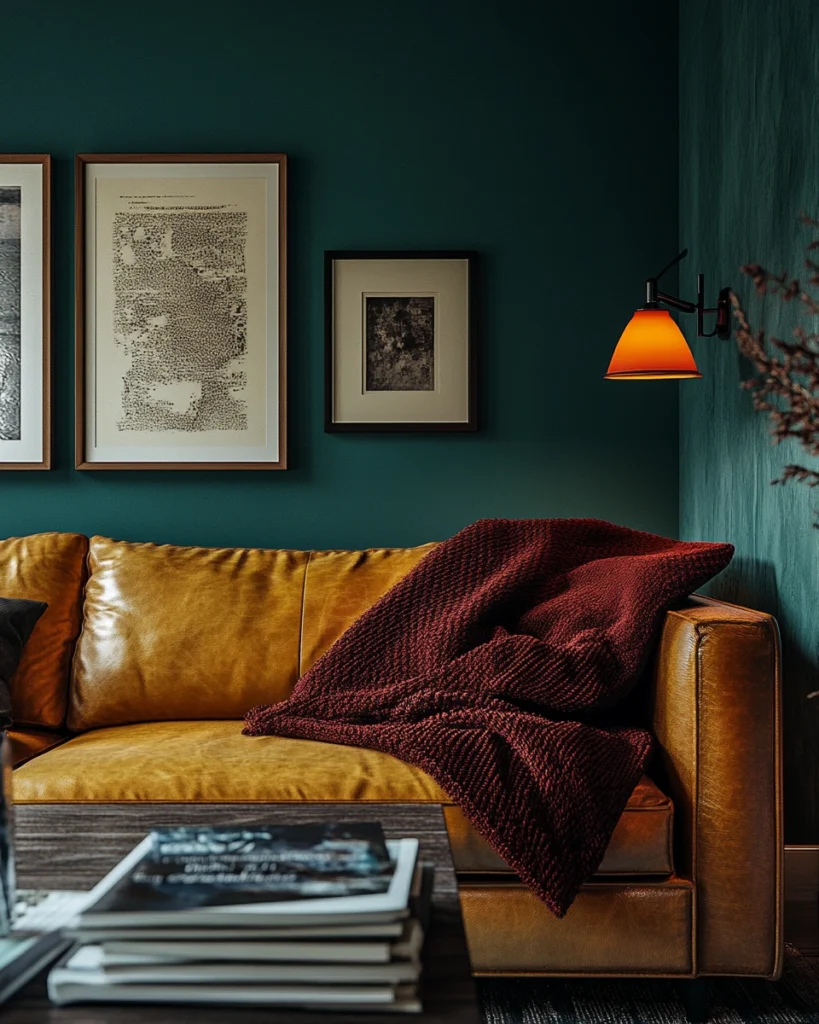
There’s a specific kind of apartment energy that most people chase but never quite nail — that dimly lit, velvet-draped, I-live-here-but-it-also-feels-like-a-private-club vibe. The moody lounge aesthetic isn’t about being dark and depressing. It’s about creating a space that feels intentional, atmospheric, and deeply comfortable all at once.
Whether you’re starting from scratch or reworking a rental, here’s exactly how to build it out.
Start With a Dark, Saturated Color Palette
The foundation of any lounge-style apartment is color — specifically, colors that absorb light rather than reflect it. Think deep emerald, charcoal gray, inky navy, warm black, or terracotta. These aren’t colors you slap on one accent wall. They need to wrap the room.
If you’re renting and can’t paint, go dark with your textiles and furniture instead. A near-black sofa, dark curtains that pool on the floor, and deep-toned rugs can replicate that enclosed, intimate feel without touching the walls.
Colors That Actually Work
- Oxblood red — moody without going full gothic
- Forest or hunter green — pairs beautifully with brass and wood
- Slate or charcoal blue — feels cool and sophisticated
- Walnut brown — warm, earthy, and grounding
- Off-black — more interesting than true black, less stark
Avoid pastels, bright whites, and anything described as “airy.” Those belong in a different apartment entirely.
Layer Your Lighting — Then Remove Half of It
This is where most people go wrong. They keep the overhead light on and wonder why their space feels like a waiting room instead of a lounge.
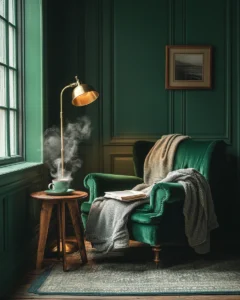
Overhead lighting is the enemy of atmosphere. Turn it off. Replace it with layers of low, warm light placed at different heights around the room.
The Lighting Layering Formula
- Floor lamps — at least one tall lamp tucked in a corner with a warm bulb (2700K or lower)
- Table lamps — on side tables and consoles, never placed symmetrically
- Shelf or strip lighting — underneath floating shelves or inside a bookcase for depth
- Practical task light — a small lamp near seating for reading, but warm-toned
The goal is pools of light, not even illumination. You want some corners to stay slightly dim. Shadows are part of the design.
Swap any cool-white or daylight bulbs out immediately. Warm amber or even Edison-style filament bulbs will transform a space faster than any furniture purchase.
Choose Furniture That Looks Weighted and Low
Lounge spaces feel grounded, not floaty. Furniture that sits low to the ground, looks heavy, and has some visual weight contributes to that settled, stayed-in feeling.
Key pieces to look for:
- Low-profile sofas with deep seating — tuxedo or chesterfield styles work well
- Round or oval coffee tables in dark wood, marble, or smoked glass
- Oversized armchairs that you can actually sink into
- Ottoman or poufs for layered, informal seating
- Sideboards or credenzas instead of open TV stands — they ground the room and hide clutter
Avoid furniture that’s too matching, too modular, or too “apartment starter pack.” Mix pieces that look like they were collected over time rather than bought in one afternoon at a big box store.
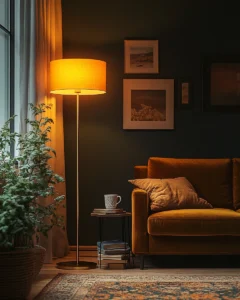
Bring in Texture — Lots of It
A moody space that doesn’t have texture just looks sad and cold. The textural richness is what keeps dark rooms from feeling oppressive. It creates visual and tactile depth that makes the space feel expensive without actually being expensive.
Textures Worth Investing In
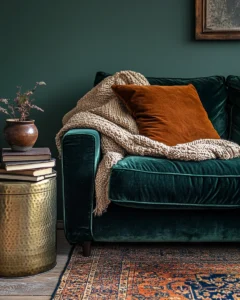
- Velvet — for cushions, sofas, and accent chairs; it absorbs light in the best way
- Wool or boucle throws — draped casually over furniture, not folded neatly
- Woven rugs — Persian-style, vintage Moroccan, or abstract patterns with warm tones
- Linen curtains in dark colors — floor to ceiling, always
- Leather — aged or distressed, never shiny patent
Layer textures the same way you layer lighting — multiple surfaces, multiple materials, no single dominant texture. A velvet sofa sitting on a wool rug with a leather cushion nearby is exactly the kind of combination that reads as rich without being flashy.
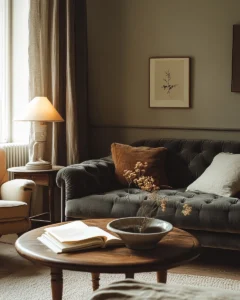
Curate Your Shelves Like a Collector
In lounge spaces, every surface tells a story. Bookshelves, side tables, and console surfaces shouldn’t look curated in a Pinterest-grid way — they should look lived in and collected, like a space that’s been thoughtfully assembled over years.
Stack books horizontally and vertically. Mix them with objects — a small sculpture, a vintage ceramic bowl used as a catch-all, framed photos leaned against the wall instead of hung. Display things at different heights. Leave a little imperfection.
If you want to lean deeper into the lounge aesthetic, dedicate one shelf entirely to objects with visual weight — dark pottery, brass figurines, stacked leather-bound notebooks, a small tabletop diffuser releasing a thin curl of steam. It shifts the whole tone of the room, making it feel like somewhere people actually gather and stay awhile.
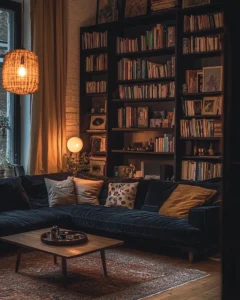
Control What Comes In — and Stays Out
The moody lounge vibe is instantly killed by visual clutter that reads as chaos rather than character. There’s a fine line between collected and layered and messy and overwhelming.
What to Keep Out of Sight
- Bright plastic items, colorful tech accessories, or anything neon
- Open cable management (get a cable box or run them behind furniture)
- Mismatched or cheaply framed photos from discount stores
- Anything that screams “office supplies”
- Brightly colored storage bins or containers that break the palette
The discipline isn’t minimalism — you can have a lot of stuff. It’s about color control and material consistency. Keep your objects within the dark, warm, earthy palette and the space cohesion holds itself together.
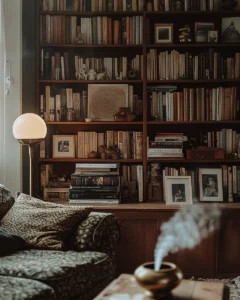
The Final Touch: Scent and Sound
This sounds like it’s outside the design brief, but it isn’t. A space that feels like a lounge engages more than just your eyes.
A consistent scent — oud, sandalwood, cedar, or tobacco vanilla — makes the room feel defined and intentional every time you walk in. Reed diffusers or fragrance sticks placed near a bookshelf or side table add to the atmosphere without demanding attention.
A Bluetooth speaker that disappears into the shelving — not a glowing smart speaker — lets the room have a soundtrack without visible tech disrupting the aesthetic. Low jazz, ambient instrumentals, or even slow electronic music played at a conversational volume completes the feeling.
These aren’t afterthoughts. They’re what separates a room that looks like a lounge from a room that actually feels like one.
The bottom line: Moody apartment energy is about restraint in brightness, generosity in texture, and consistency in palette. You’re not decorating for Instagram — you’re designing a space you actually want to spend time in after dark. Start with the lighting, commit to the color, and let everything else follow.
