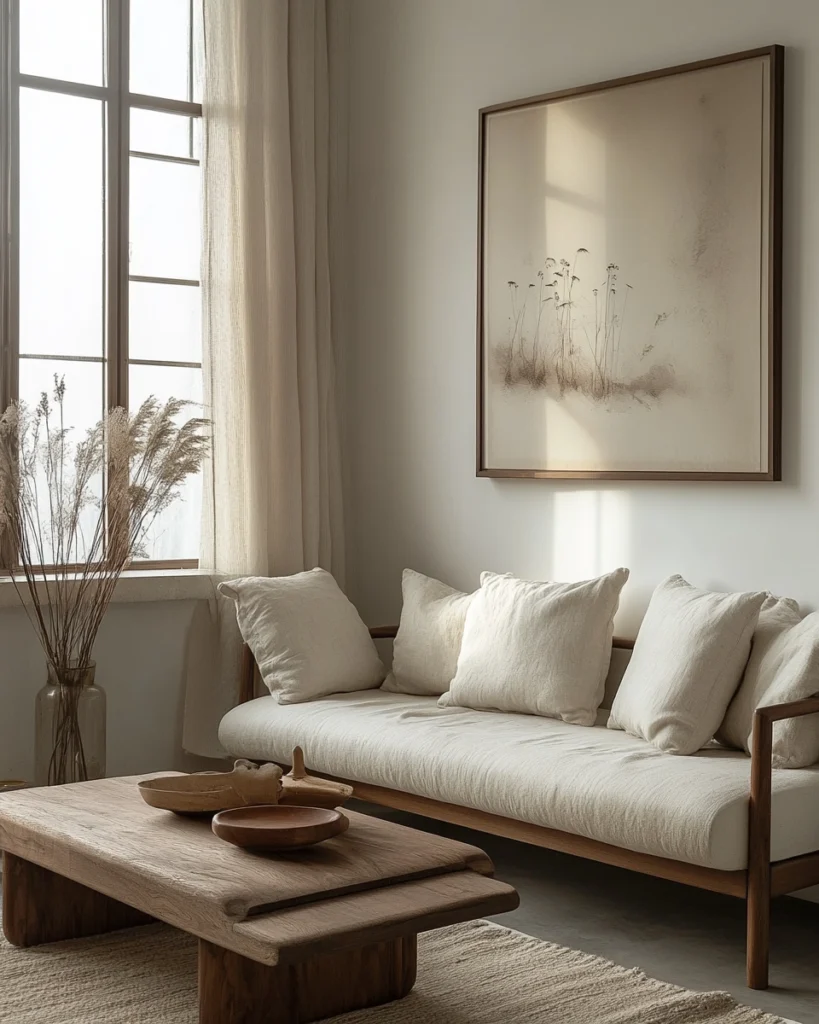
Living in a small apartment often means fighting a constant battle against clutter. But here’s the thing — clutter isn’t just a space problem, it’s a storage design problem. The right storage solutions don’t just hold your stuff; they actively hide it, organize it, and make your home feel bigger and more intentional. Minimalist apartment storage is about working smarter, not sacrificing your belongings or your style.
Why Minimalist Storage Changes Everything
Most apartment dwellers assume they need more space. In reality, they just need better storage. Minimalist storage design operates on a simple principle: everything should have a home, and ideally, that home should be out of sight. When storage is intentional and hidden, your apartment automatically feels larger, calmer, and more put-together — even if nothing else changes.
This approach isn’t about getting rid of everything you own. It’s about choosing furniture and systems that work double duty, concealing everyday items behind clean surfaces and clever design. Think drawers inside benches, floating shelves with closed cabinets, and beds with storage underneath. Every piece earns its place by doing more than one job.
Furniture That Works Harder Than It Looks
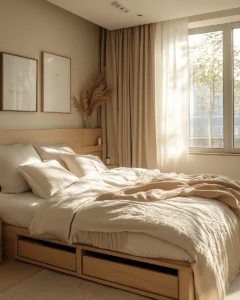
The single most impactful upgrade you can make in a small apartment is switching to multi-functional furniture. These pieces look like ordinary furniture but hide significant storage inside them.
Storage Beds and Bed Frames
A platform bed with built-in drawers is arguably the most efficient storage upgrade for a small bedroom. The space under a standard bed is often wasted or turned into a chaotic catch-all. Storage beds replace that dead zone with deep, organized drawer compartments — perfect for seasonal clothing, extra bedding, or bulky items you rarely need but can’t part with.
Look for beds in matte wood finishes like walnut, oak, or painted white MDF. These materials blend into minimalist interiors seamlessly while delivering serious storage capacity underneath.
Ottoman Coffee Tables with Hidden Storage
Swap out a standard coffee table for a tufted or lidded storage ottoman. These are especially powerful in living rooms where throw blankets, remote controls, magazines, and chargers tend to pile up. With a storage ottoman, you lift the lid, toss everything in, and instantly your living room looks guest-ready. Choose solid colors in charcoal, ivory, or warm taupe to keep the look clean and minimal.
Entryway Benches with Shoe Storage
The entryway is usually the first place clutter gathers. A storage bench with cubby holes or a lift-top compartment gives shoes, bags, and everyday carry items a dedicated place to land — so they never end up scattered across your floors. Many designs feature a cushioned seat on top for practical use, turning wasted square footage into a genuinely functional zone.
Pro Tip: When selecting multi-functional furniture, prioritize pieces with smooth-closing mechanisms and durable hardware. Cheap hinges and sliders break quickly under daily use, defeating the purpose entirely.
Wall-Mounted and Floating Storage Systems
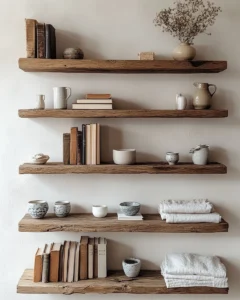
Wall space is the most underutilized real estate in any apartment. Going vertical with your storage strategy frees up floor space, reduces visual clutter, and draws the eye upward — which makes ceilings feel higher and rooms feel larger.
Floating Shelves with Closed Cabinets
Open shelves look beautiful but require constant styling to avoid looking cluttered. The smarter move? Mix floating open shelves with wall-mounted closed cabinets. Display a few curated objects on the open sections, and hide everything else behind cabinet doors. This creates a curated, intentional look without forcing you to organize perfectly every single day.
Pegboard and Modular Wall Systems
In kitchens, home offices, and craft areas, pegboard systems are extraordinarily practical. Modern pegboard designs have come a long way from the old utilitarian hardware-store look. Today’s options come in clean white, matte black, or natural wood, with modular shelves, hooks, and bins that you can rearrange as your needs change. They keep frequently used items accessible while keeping them off countertops and desks.
Built-In Nooks and Recessed Shelving
If you’re willing to do a small renovation, recessed shelving into wall cavities is one of the most space-efficient storage tricks available. Between wall studs, you often have 3.5 to 5 inches of depth — enough for spice racks, bathroom shelving, or book nooks. The result looks custom-built, adds character, and takes up zero floor space.
Kitchen Storage That Hides the Chaos
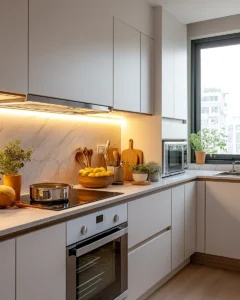
Kitchens collect clutter faster than any other room in an apartment. Appliances, cookware, pantry items, and cleaning supplies all compete for limited counter and cabinet space. Smart minimalist kitchen storage is about concealment and accessibility in equal measure.
- Handleless cabinets: Flat-front, push-to-open cabinetry creates an unbroken surface that looks incredibly clean and modern. No handles means no visual noise.
- Appliance garages: A dedicated corner cabinet with a roll-up or fold-down door keeps your coffee maker, toaster, and blender out of sight when not in use.
- Deep drawer organizers: Replace upper cabinets with deep drawer systems at counter height. Everything is visible and reachable without digging through stacked items.
- Under-sink pull-outs: Specialized pull-out organizers with U-shaped cutouts work around pipes and double your usable space beneath the sink.
- Pantry door organizers: The inside of pantry or closet doors is prime storage real estate. Slim rack systems hold cans, bottles, foil, wraps, and dry goods without taking any shelf space.
Bathroom Storage in Tight Spaces
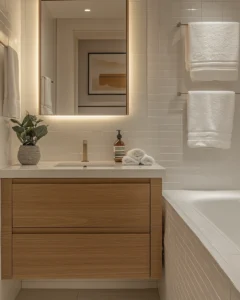
Apartment bathrooms are notoriously small, and the clutter of daily grooming products, towels, and cleaning supplies can quickly overwhelm the space. Minimalist bathroom storage focuses on going vertical and hiding what doesn’t need to be on display.
Recessed Medicine Cabinets
A recessed medicine cabinet sits flush with the wall, taking up zero visual or physical depth while providing meaningful storage for medications, toiletries, and personal care products. Modern versions feature frameless mirrors and soft-close doors that blend seamlessly into bathroom walls. This single swap can eliminate a cluttered countertop entirely.
Floating Vanities
A wall-mounted floating vanity opens up floor space below, making even a small bathroom feel more airy and spacious. Combined with drawers or closed cabinet doors, it provides ample concealed storage while maintaining a clean, hotel-like aesthetic.
Over-Toilet Ladder Shelves and Towers
The space above the toilet is almost always unused. A slim tower shelf or ladder unit positioned over the tank gives you several tiers of vertical storage for extra toilet paper, folded towels, and bathroom supplies — all in a footprint of less than one square foot of floor space.
Closet and Wardrobe Organization
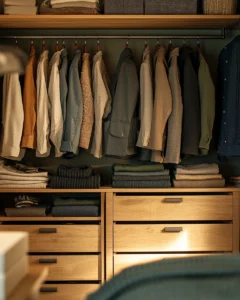
Closets in apartments are often undersized and inefficiently laid out. A single hanging rod and one shelf is rarely enough for most people’s wardrobes. Upgrading your closet system is one of the highest-ROI storage investments you can make.
Modular Closet Systems
Modular closet systems allow you to design a custom configuration using interchangeable components. You can add double-hanging sections for shirts and jackets, drawer inserts for folded items, and dedicated zones for shoes and accessories — all within your existing closet footprint. These systems dramatically increase usable storage and bring visual order that feels intentional rather than chaotic.
Slim Velvet Hangers
Switching from bulky plastic hangers to slim velvet non-slip hangers can increase your hanging capacity by 30 to 50 percent while making your closet look significantly more organized. It’s a small, inexpensive change with a surprisingly big visual and functional impact.
The “One In, One Out” Rule
No storage system works long-term without a habit to support it. The one-in, one-out rule — where every new item brought into the apartment means an old item leaves — prevents storage systems from slowly filling back up over time. It’s not a decor tip, it’s a lifestyle habit that makes every storage solution you implement actually sustainable.
Hidden Storage in Living Areas
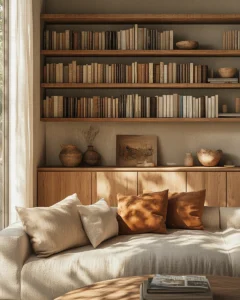
The living room presents unique storage challenges because it’s a high-traffic, multipurpose space where aesthetics matter most. Visible clutter here is most disruptive to the overall feel of your home.
- Built-in media units: Floor-to-ceiling built-in units with closed lower cabinets and open upper shelving keep entertainment equipment, cables, and miscellaneous items completely hidden while the open sections allow for intentional display.
- Sofa with storage: Some sofas, particularly sectionals and chaise designs, include storage compartments beneath the seating for board games, extra bedding, or seasonal items.
- Side tables with drawers: Replace basic side tables with versions that include a drawer or lower shelf with a basket, giving remote controls, books, and charging cables a dedicated spot.
- Floating TV console: A wall-mounted TV paired with a floating media console eliminates the bulk of traditional entertainment centers while providing cable management and enclosed storage below the screen.
Your Clutter-Free Apartment Starts with One Decision
You don’t need a bigger apartment to live without clutter — you need smarter storage decisions. Start with one room, identify where clutter consistently collects, and address that specific problem with a targeted solution. A storage bed here, a recessed cabinet there, a modular closet system in between. Over time, these incremental upgrades compound into an apartment that feels genuinely calm, spacious, and intentional — not because it’s empty, but because everything finally has a place. That’s what minimalist storage really means: not less, just better.
