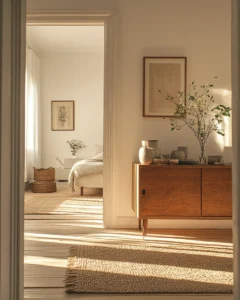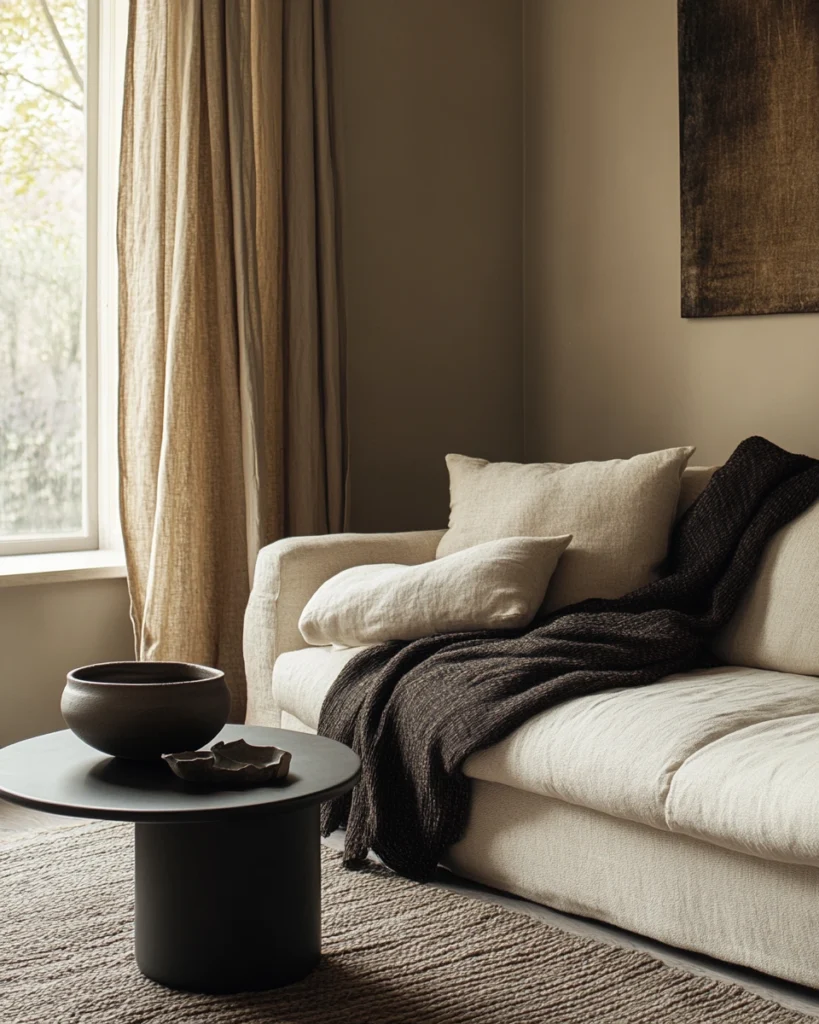
There’s a big difference between a space that looks empty and a space that looks intentional. Minimalism, when done right, doesn’t feel cold or sparse — it feels curated, calm, and quietly luxurious. The secret? It’s not about spending more. It’s about choosing better.
Whether you’re in a studio apartment or a two-bedroom rental, these ideas will help you create a minimalist home that looks like it cost twice what it did.
Start With a Neutral but Layered Color Palette
The foundation of any expensive-looking minimalist apartment is a thoughtful color palette — not just “white walls and beige furniture,” but a carefully layered set of tones that work together.
Think warm whites, soft greiges (grey-beige), muted terracotta, and deep charcoal. These shades feel elevated because they’re specific — not the generic off-white you find in every rental. When you layer three or four of these tones across walls, furniture, and textiles, the room starts to feel like it was professionally designed.
Palette tips that look expensive:
- Use the same warm undertone across all your neutrals to avoid visual clashing
- Add one deeper accent tone — slate blue, dusty olive, or charcoal — to give the room depth
- Keep trim and ceilings slightly brighter than your walls to lift the space
Invest in a Few High-Impact Furniture Pieces
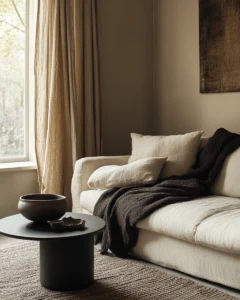
Minimalism isn’t about filling a room with cheap basics. It’s about having fewer things — but making sure those things are genuinely good. One well-made sofa will always look more expensive than three average pieces crammed together.
When shopping on a budget, prioritize the pieces that get the most visual attention: the sofa, the bed frame, the dining table. These are your “hero” pieces. Everything else — side tables, shelves, accent chairs — can be secondary.
What to Look For in “Quiet Luxury” Furniture
- Clean lines with no excessive ornamentation — think simple silhouettes, not ornate carvings
- Solid wood or stone details — even a small marble tray elevates a surface instantly
- Low-profile designs — furniture closer to the ground feels more intentional and architectural
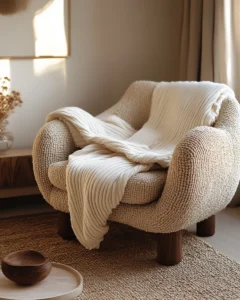
- Linen, boucle, or velvet upholstery — these textures read as expensive even at mid-range prices
Use Texture to Replace Visual Clutter
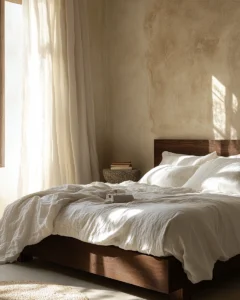
One of the biggest mistakes in minimalist decorating is confusing “minimal” with “flat.” A room with no texture feels sterile, not sophisticated. The goal is to reduce clutter while adding richness through materials and tactile depth.
Texture is what keeps a minimal room from looking like a showroom floor sample.
Textures that add luxury without adding clutter:
- Chunky knit or ribbed throws over a sofa or chair
- Woven or textured cushion covers in tonal colors
- A wool or jute area rug with visible weave and natural variation
- Linen curtains with subtle texture and generous pooling at the floor
- A stone, concrete, or travertine decorative object on a shelf or console
Master the Art of Negative Space
Expensive interiors don’t try to fill every surface. They leave room to breathe. Negative space — the empty areas in a room — is not wasted space. It’s what makes every object you do display feel intentional and valuable.
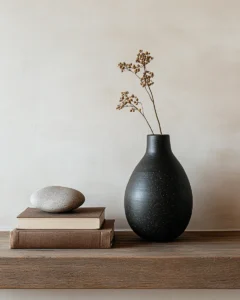
A single piece of art on a wide wall looks more powerful than five pieces crammed together. A console table with only two or three carefully chosen objects looks curated. A bookshelf with breathing room between items looks like a gallery.
How to Practice Intentional Negative Space
- Clear every surface, then add back only what you love and what serves a purpose
- Group objects in odd numbers — threes and fives feel more natural than pairs
- Vary heights when displaying objects — a short ceramic next to a tall object creates visual rhythm
- Leave at least 30–40% of any shelf empty — the space itself becomes part of the design
Upgrade Your Lighting for Instant Luxury
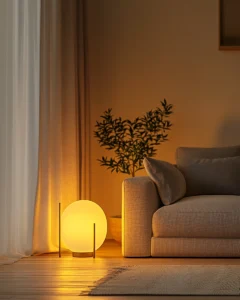
Nothing transforms an apartment faster than thoughtful lighting. Harsh overhead lighting is the enemy of luxury — it flattens everything and reveals every imperfection. Layered, warm lighting does the opposite.
The goal is to eliminate reliance on a single ceiling fixture and instead build layers of light at different heights.
Lighting layers that make any apartment feel high-end:
- Ambient light: a pendant or a flush mount with a warm bulb (2700K or lower)
- Task light: a sculptural floor lamp or a desk lamp with a linen shade
- Accent light: a small table lamp with a ceramic or stone base placed on a console or shelf
Look for fixtures with interesting silhouettes — an arched floor lamp, a pleated linen shade, a ribbed glass pendant. These become functional sculpture in a minimalist space.
Choose Art That Earns Its Wall Space
Art is one of the fastest ways to elevate a minimalist apartment — and one of the easiest to get wrong. In a minimal space, every piece of art is on display without distraction, so it needs to carry real visual weight.
You don’t need to spend thousands. Abstract prints, photography, and even framed vintage pages can look incredibly refined — as long as the framing is right.
Affordable art upgrades that look expensive:
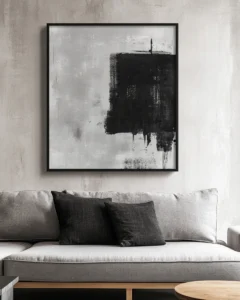
- Thin black or dark wood frames — avoid chunky or overly decorative frames
- Large single pieces over a sofa or bed — oversized art immediately reads as intentional
- Black and white photography with high contrast and simple subject matter
- Neutral abstract prints in earthy tones that echo your existing palette
Frame consistency is key in a minimalist apartment. Even mismatched art will look cohesive when the frames are all the same style and finish.
Keep Storage Hidden and Seamless
Clutter is the fastest way to kill the luxury feel of a minimalist apartment. But life is messy — you need storage. The trick is making it invisible.
Built-in-looking storage, closed cabinetry, and furniture with hidden compartments are the backbone of a functional minimalist home. When storage is seamless, the room stays calm even when real life is happening inside it.
Storage solutions that disappear into the design:
- Ottomans with interior storage that double as coffee tables
- Bed frames with built-in drawers beneath the mattress
- Floor-to-ceiling shelving with a mix of closed cabinets and open display sections
- Baskets in tonal colors (cream, sand, charcoal) tucked beneath console tables
- Media units with doors that close fully — no visible cables, no exposed equipment
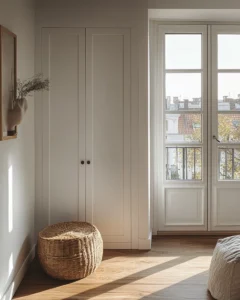
The Real Secret: Edit Ruthlessly and Often
The most expensive-looking minimalist apartments aren’t designed once and left alone. They’re constantly edited. Every few weeks, the owner looks at each surface and asks: does this need to be here? Is this earning its place?
That discipline — the willingness to remove things even when you like them — is what separates a truly elevated minimalist space from one that just looks sparse.
Start small: pick one surface in your apartment and remove everything from it. Then add back only two or three things maximum. Notice how differently that surface reads. Then move to the next one.
Minimalism that feels expensive is really just clarity with intention. It’s not about what’s in the room — it’s about what you chose to keep, and why.