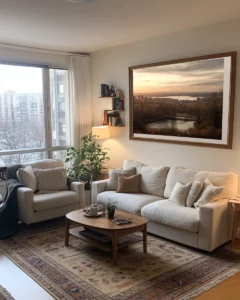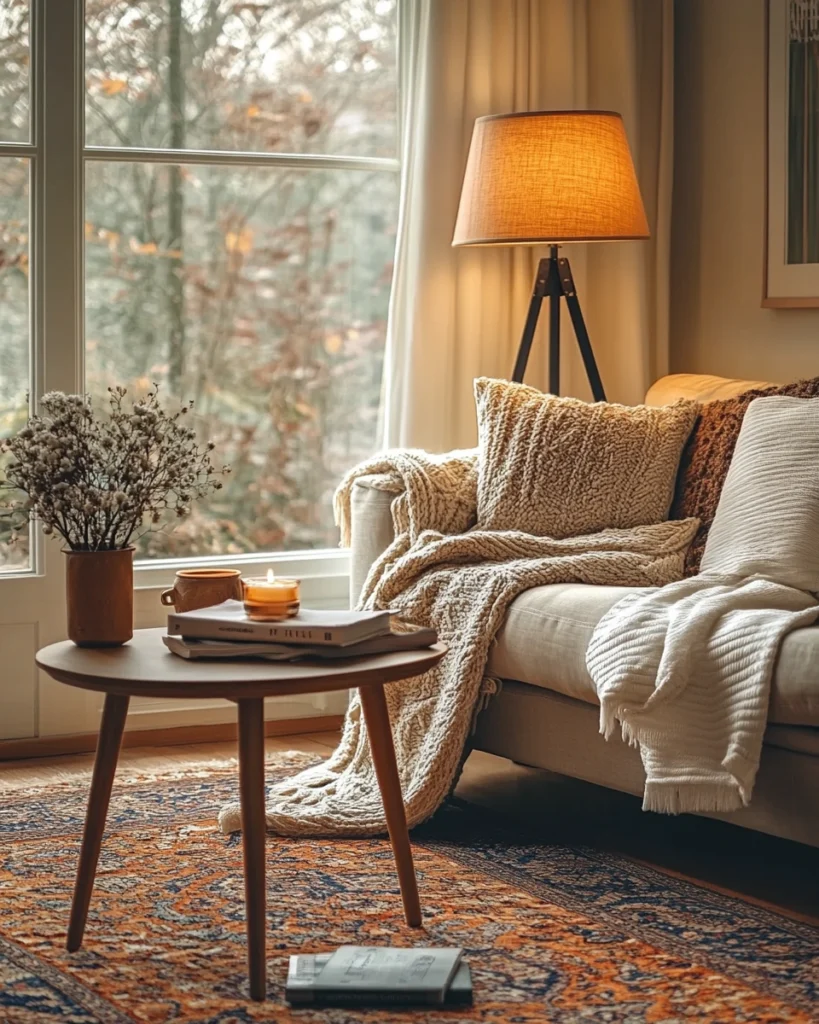
If you’ve ever stared at your small living room and felt completely stuck, you’re not alone. Most people try to squeeze in furniture the same way they would in a larger space — and then wonder why everything feels cramped, awkward, and impossible to move through. The truth is, small living rooms don’t need less furniture. They need smarter placement. One simple layout hack can completely transform how your tiny living room looks, flows, and actually feels to live in every day.
The One Rule Most People Break in Small Living Rooms
Here’s what almost everyone does wrong: they push all the furniture against the walls.
It feels logical. If the sofa is against the wall, there’s more floor space in the middle, right? In theory, yes. In practice, this layout makes a small room feel like an empty hallway. Everything is disconnected, the center becomes a dead zone, and conversation feels oddly formal.
The layout hack that actually works? Pull your furniture away from the walls and float it toward the center of the room.
This is the single biggest difference between a small room that feels intentional and one that feels like furniture was just “stored” in it.
Why Floating Furniture Actually Makes a Room Feel Bigger
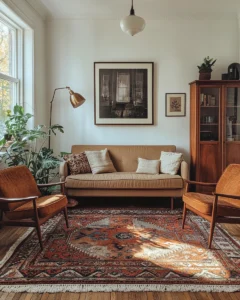
It sounds backward, but floating your furniture creates the illusion of more space — not less. Here’s why it works:
- It defines a conversation zone. When furniture clusters together with purpose, the eye reads it as a cozy, complete space — not a cluttered one.
- It shows the perimeter of the floor. A small strip of visible floor between the sofa and the wall makes the room look wider than it is.
- It creates visual breathing room. That gap between the back of your sofa and the wall signals to your brain: this space has depth.
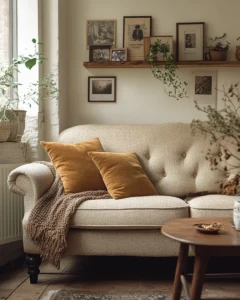
Even pulling your sofa just 4–6 inches away from the wall makes a noticeable difference. You don’t need a lot of floor space to make this work.
How to Apply the Layout Hack Step by Step
Step 1: Anchor Everything With a Rug
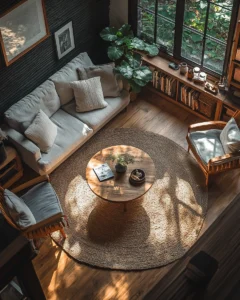
Before you move a single piece of furniture, lay down your rug. This is non-negotiable in a small living room. The rug defines the “room within the room” and tells your furniture where to go.
For a tiny space, go bigger than you think. A rug that’s too small floats awkwardly and makes everything look unmoored. Ideally, your sofa’s front legs (at minimum) should sit on the rug.
Step 2: Position the Sofa First, Away from the Wall
Place your sofa as the anchor of the seating zone. Pull it at least 4–6 inches away from the wall behind it. If you have the space, a full foot back works even better.
Face the sofa toward your focal point — whether that’s a TV, a fireplace, a window, or a gallery wall. The sofa should face something with intention.
Step 3: Use a Round or Oval Coffee Table
Sharp corners on a coffee table in a small living room are a circulation nightmare. Switch to a round or oval table and you’ll immediately gain functional walking space. It also softens the overall look of the room, which matters in a smaller footprint.
Step 4: Add One or Two Small Accent Chairs at Angles
Instead of a matching loveseat (which often eats up too much floor space), try one or two accent chairs placed at slight angles to the sofa. Angled furniture interrupts the rigid box effect and adds a layered, collected look that feels intentional rather than crammed.
Step 5: Use Vertical Space to Draw the Eye Up
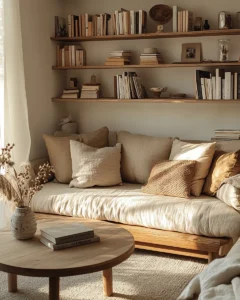
Once your seating zone is set, shift your attention upward. Small rooms benefit enormously from vertical visual cues — tall bookshelves, floor-to-ceiling curtains, stacked artwork, or a tall floor lamp. This tricks the eye into reading the room as taller and more spacious than it really is.
Hang curtains as close to the ceiling as possible, not just above the window frame. This is one of the most underrated height hacks in any small space.
Small Living Room Furniture Choices That Support This Layout
Not every sofa, chair, or table is a good fit for this layout approach. Here’s what tends to work best:
Sofas:
- Low-profile, mid-century modern silhouettes with visible legs
- Two-seater or apartment-size sofas (usually around 72–78 inches wide)
- Avoid bulky sectionals unless the L-shape fits the specific corner of your room
Coffee Tables:
- Round, oval, or nesting tables
- Glass tops for visual lightness
- Ottomans with trays (multifunctional and soft)
Storage:
- Floating wall shelves instead of floor-to-ceiling bulky units
- Storage ottomans that double as seating
- Slim media consoles with closed storage to reduce visual clutter
Color and Light: The Silent Layout Helpers
The layout hack works even harder when your color and lighting choices reinforce it.
Color tips for small living rooms:
- Use a consistent wall color (even a warm or bold one) to make the room feel cohesive rather than choppy
- Keep the ceiling lighter than the walls to push height upward
- Use consistent tones for large furniture pieces — save contrast and pattern for pillows, rugs, and small decor
Lighting tips:
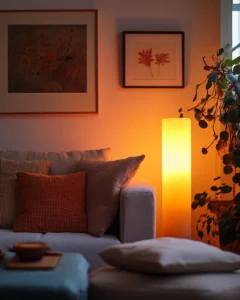
- Layer your lighting: overhead, floor lamp, and table lamp if possible
- Avoid relying on a single overhead light — it flattens the space
- Warm-toned bulbs (2700K–3000K) make small rooms feel instantly cozier and more expansive
Mistakes to Avoid When Rearranging a Small Living Room
Even with the right layout approach, a few common missteps can undo all your progress:
- Too many small pieces of furniture. Three small chairs don’t work better than one good sofa. Fewer, better-proportioned pieces always win.
- Blocking natural light pathways. Don’t push furniture in front of windows or block the natural light flow through the room.
- Ignoring traffic flow. You should be able to walk from the door to any seating spot without squeezing past furniture.
- Cluttered surfaces. In a tiny living room, visual clutter on every surface makes the space feel smaller than it is. Give some surfaces breathing room.
The Bottom Line
A tiny living room isn’t a design problem — it’s a layout problem. And the solution is simpler than you think: stop hiding everything against the walls and start arranging with intention. Float your furniture, anchor it with a rug, think vertically, and choose pieces that carry their visual weight without overwhelming the floor plan.
One honest rearrangement — even for free, without buying a single new piece — can make your living room feel like an entirely different space. Start with the sofa. Pull it forward. See what changes.