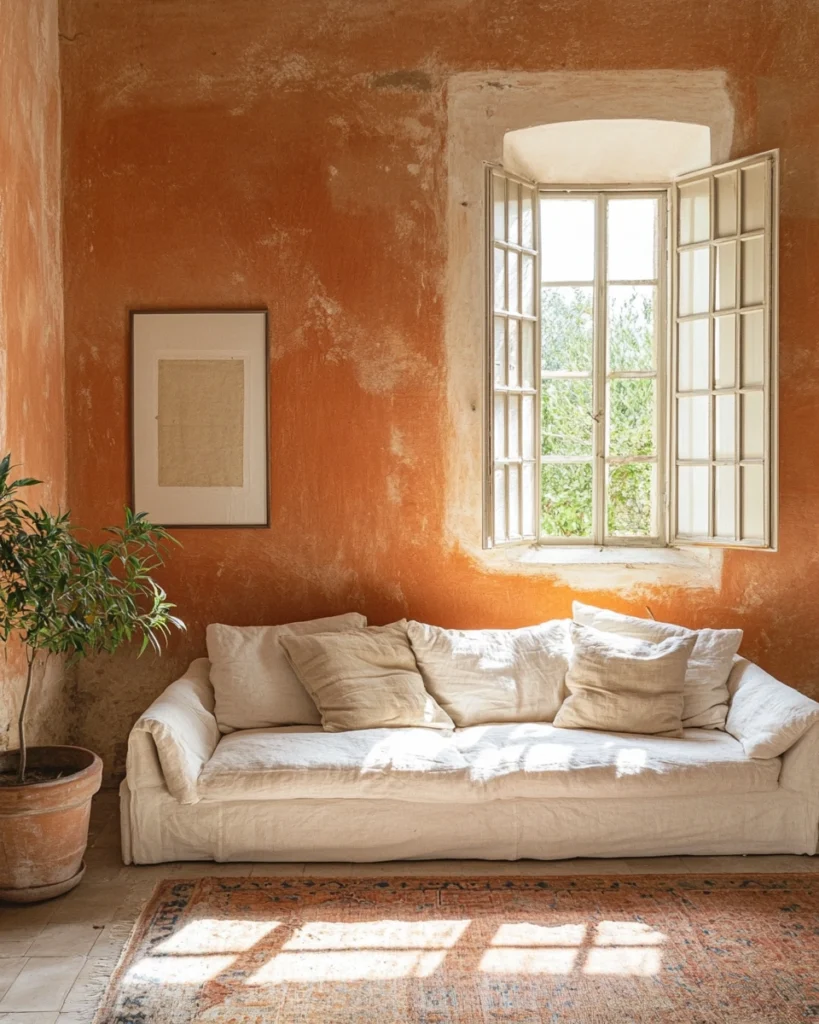
If you’ve ever scrolled through photos of a sun-drenched Roman apartment — terracotta floors, arched doorways, linen curtains catching the breeze — and thought I could never afford that, think again. The Italian aesthetic is actually one of the most achievable looks on a budget, because it’s rooted in age, imperfection, and character rather than brand-new furniture and expensive accessories.
Here’s how to bring that warm, romantic, lived-in Italian apartment energy into your home without spending a fortune.
Start With the Right Color Palette
The Italian interior palette is earthy, warm, and deeply saturated — never cold or clinical. Think terracotta, dusty rose, aged cream, burnt sienna, warm olive, and faded gold. These are the colors of old Italian villages, sun-bleached plaster, and antique pottery.
- Walls: Go for warm white with a yellow or pink undertone — not bright white. A matte or limewash finish adds texture and depth instantly.
- Accents: Terracotta and rust tones bring warmth. Even a single terracotta-colored throw pillow or ceramic bowl can shift the energy of a room.
- Floors: If you have hardwood, embrace it. If you have tile, lean into it. Both are very Italian. You can also layer a worn, faded Persian or Kilim-style rug to add richness underfoot.
Embrace Old-World Furniture and Antique Finds
Italian interiors don’t rely on matching furniture sets. In fact, a perfectly coordinated room feels very un-Italian. The key is mixing old and new, ornate and simple, polished and worn.
Where to Find Budget Pieces
- Thrift stores and flea markets are your best friends. Look for pieces with carved wood details, curved legs, or aged patina.
- Facebook Marketplace and Craigslist often have solid wood furniture for next to nothing. A scratched wooden dresser or a mismatched dining chair can become a centerpiece with the right styling.
- IKEA hacks: A plain IKEA piece can go Italian with the right hardware — swap out handles for aged brass or ceramic knobs and suddenly it looks antique.
Key Furniture Pieces to Look For
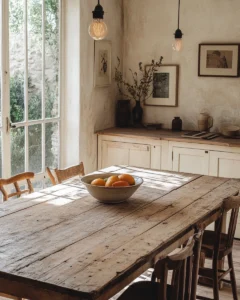
- A heavy wooden dining table — rustic grain, no glass
- Linen or velvet upholstered chairs in dusty rose, sage, or cognac
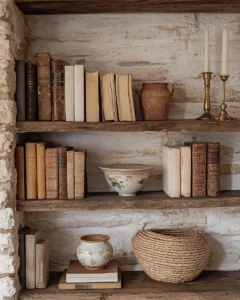
- A wooden bookshelf filled with real books, ceramics, and artwork
- A wrought iron bed frame or a simple wooden one with a worn finish
Layer Textures Like an Italian Nonna Would
Italians are not afraid of texture. Linen, velvet, aged wood, hammered metal, hand-painted ceramic — these materials layered together create a richness that looks expensive but doesn’t have to be.
- Linen everywhere: Linen curtains (even slightly wrinkled ones — especially slightly wrinkled ones), linen throw blankets, linen pillow covers. They’re affordable and age beautifully.
- Ceramic and pottery: Look for handmade or hand-painted ceramics in earthy colors. Terracotta pots, olive oil jugs repurposed as vases, ceramic plates displayed on walls — all deeply Italian.
- Woven baskets: A couple of woven baskets add warmth and are useful for storage. Find them at dollar stores or discount shops.
- Aged brass hardware and accents: Switch out chrome fixtures for brass wherever you can. Curtain rods, cabinet handles, picture frames — brass warms everything up.
Dress Your Windows the Italian Way
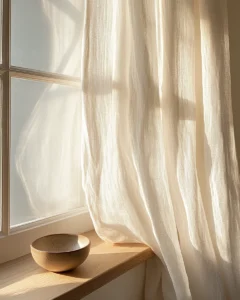
Windows are everything in an Italian apartment. The goal is soft light, movement, and romance — not darkness and privacy.
The Budget Solution: Linen Panel Curtains
Long, flowing linen curtains hung high above the window frame make ceilings look taller and rooms look more dramatic. You don’t need to spend much — IKEA’s DYTÅG or similar curtains in natural linen tones work perfectly.
- Hang them as high as possible — even at the ceiling if you can
- Let them puddle slightly on the floor for that effortless Italian look
- Don’t iron them — the slight wrinkle is part of the charm
- Add wooden or brass curtain rods to complete the look
Create an Italian Gallery Wall
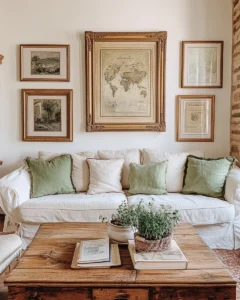
Art is essential to Italian living. But you don’t need expensive originals — you need the feeling of a home where art matters.
Budget-Friendly Art Ideas
- Print antique botanical or architectural illustrations — free downloads from sites like Rawpixel or The Met’s open-access collection
- Frame old maps, vintage recipe cards, or Italian food labels for an authentic kitchen gallery
- Use mismatched frames — not matching sets. Combine thin black frames, ornate gold ones, and simple wooden frames
- Add a small mirror with an ornate or arched frame — mirrors are deeply Italian and make small spaces feel bigger
Lean some frames against the wall instead of hanging them all. It looks intentional and very European.
The Italian Kitchen Aesthetic on Any Budget
The Italian kitchen is the heart of the home — rustic, functional, and full of personality. You don’t need to renovate to get there.
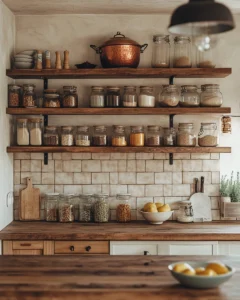
- Display your food: A wooden bowl of lemons, a hanging bunch of garlic, glass jars of dried pasta or beans on open shelves — all deeply Italian and completely free if you already have food in your kitchen
- Open shelving: If you can, remove upper cabinet doors or add a simple open shelf. Display mismatched ceramics, olive oil bottles, and cookbooks
- Copper and iron cookware: Hang pots and pans on a wall-mounted rack for that rustic Italian kitchen look. Thrift stores often have copper pans for very little
- Marble or wood cutting boards: Keep them on the counter as decor. They’re practical and beautiful
Small Touches That Make the Biggest Difference
Sometimes the most Italian thing you can do is the smallest and cheapest:
- Put a tablecloth on your dining table — a linen or cotton one in a warm stripe or solid earthy tone instantly transforms a space
- Use amber or warm-toned light bulbs throughout. Cold white light destroys Italian vibes. Warm Edison bulbs cost almost nothing
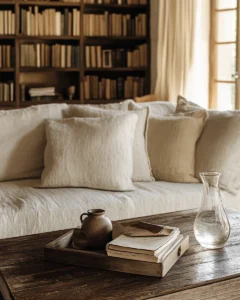
- Stack real books — not for show, but because Italians read. A book on the coffee table, a stack on the nightstand, a shelf overflowing with spines
- Keep surfaces layered but not cluttered — a small tray to corral items on a dresser, a ceramic dish for keys by the door, a pitcher on the kitchen counter
- Display food and drink beautifully — a bottle of olive oil with a nice label, a carafe of water, a wooden board with cheeses. Italians make everyday living beautiful
Conclusion: Italian Vibes Are a Mindset, Not a Budget
The secret to Italian apartment style is this: stop waiting until you can afford perfection. The cracked ceramic mug, the worn wooden table, the mismatched chairs — these aren’t flaws in an Italian home. They’re the story. They’re the character.
Start with warm colors on your walls, layer in linen and ceramics, hunt for wooden furniture at thrift stores, let your windows breathe with flowing curtains, and display your life like it’s worth looking at. Because it is.
Italian dream apartment vibes aren’t built with money. They’re built with intention, warmth, and a willingness to let beauty show up in imperfect, everyday things.
