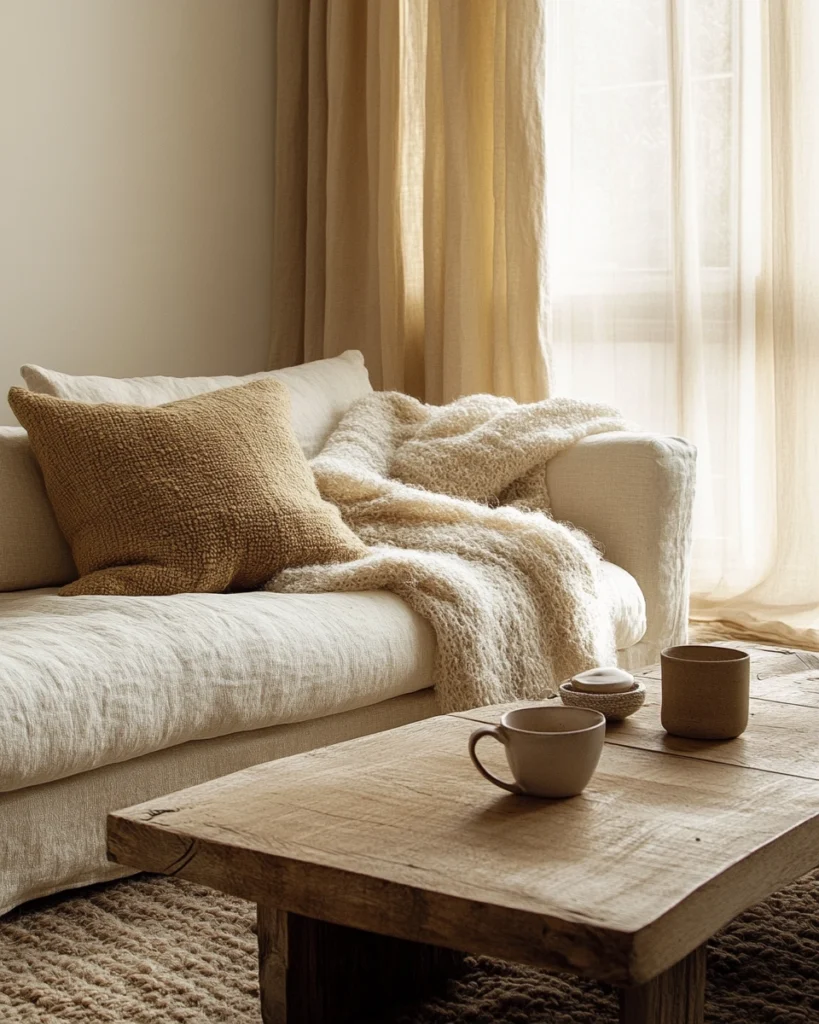
There’s something quietly powerful about a space that feels both simple and deeply comfortable. A minimal warm apartment with soft textures isn’t about empty rooms or cold white walls — it’s about choosing less, but choosing it with intention. It’s warmth without clutter. Calm without sterility.
This style is having a major moment, and for good reason. People are craving homes that feel like a true exhale at the end of the day — spaces that don’t overwhelm, don’t demand attention, but still feel rich and alive.
What “Minimal Warm” Actually Means
Minimalism often gets a bad rap for feeling cold or clinical. But that’s usually the result of confusing minimal with empty. True minimal warmth is about restraint, not absence.
The idea is to keep surfaces clean and furniture intentional, while layering in softness through fabrics, tones, and natural materials. Think: fewer pieces, but each one earns its place. Every cushion, every rug, every side table has a reason to exist — and together, they create an atmosphere that feels complete without feeling crowded.
This is also deeply practical for apartments. Smaller spaces benefit enormously from edited, purposeful decorating. A warm minimal apartment looks larger, breathes better, and is far easier to maintain.
The Color Palette: Warmth Without Overwhelm
Color is where most people go wrong with this aesthetic. The temptation is to reach for stark white — but stark white reads cold.
Instead, build your palette around warm neutrals:
- Warm white or off-white (cream, linen, parchment) for walls
- Sand, camel, and terracotta for furniture and accent tones
- Dusty taupe, mushroom, and warm gray for layering
- Deep clay or rust as subtle accent colors in cushions or artwork
These tones work together without fighting for attention. They feel sun-warmed, grounded, and inherently comfortable. You don’t need color contrast to make a room interesting — you need tonal depth. Layer three or four shades from the same warm family and the result is sophisticated without being loud.
Soft Textures: The Heart of the Style
If warm neutrals set the tone, soft textures are what make you feel it. This is the single most impactful thing you can do to transform a minimal apartment from flat to full.
Fabrics to Prioritize
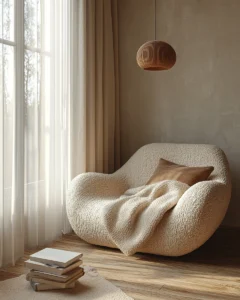
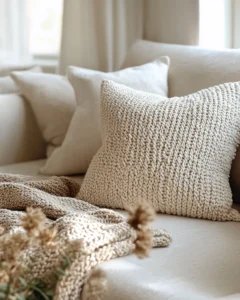
Boucle is the texture of the moment — that loopy, nubby fabric seen on sofas, armchairs, and ottomans. It catches light beautifully and adds tactile richness without any visual noise.
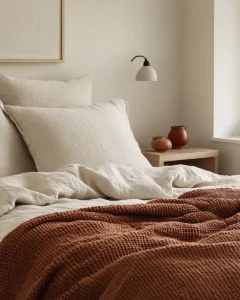
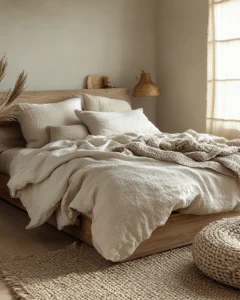
Linen is your everyday workhorse. Use it for curtains, cushion covers, and bedding. Slightly wrinkled linen reads as effortlessly relaxed rather than messy.
Chunky knit throws add that cozy, handcrafted dimension. Draped casually over a sofa or chair, they signal comfort instantly.
Velvet — used sparingly — brings depth. A single velvet cushion in a warm rust or dusty rose anchors a neutral sofa with quiet drama.
Layering Textures Without Chaos
The secret to layering textures in a minimal space is keeping colors consistent. Two or three different textures in the same tonal family read as curated, not cluttered. Mix a smooth linen cushion with a chunky knit throw and a boucle pillow — all in warm neutrals — and the effect is effortlessly rich.
Furniture: Fewer Pieces, Better Quality
A minimal warm apartment asks you to be selective with furniture. Every piece should pull double duty — functionally and aesthetically.
Key Furniture Choices
The sofa is the anchor. Go for clean, low-profile silhouettes in fabric upholstery — boucle, linen, or velvet in a warm neutral. Avoid glossy or overly structured pieces. Softness in the silhouette matters as much as the material.
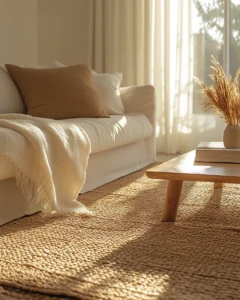
Coffee tables work best in natural wood, travertine, or rattan. Round shapes feel less rigid and open up floor space visually.
Storage is furniture too. A simple wooden shelf, a woven storage basket, a sleek sideboard — these keep surfaces clear without sacrificing function.
Beds should feel like a nest. A low platform frame in natural wood or upholstered linen with oversized pillows and layered bedding sets the entire tone of a bedroom.
Lighting: The Invisible Texture
Lighting shapes how every other element in your apartment feels. In a warm minimal space, the goal is always soft and amber-toned, never cool or fluorescent.
Lighting Tips That Actually Work
- Swap cool-white bulbs for warm-white LEDs (2700K–3000K). This single change transforms the mood of any room.
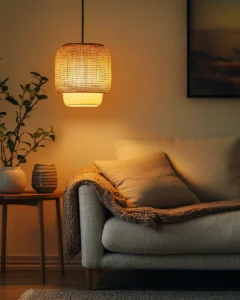
- Use multiple light sources at different heights instead of relying on a single overhead fixture. A floor lamp, a table lamp, and subtle ceiling light create dimension and warmth.
- Pendants with natural materials — rattan, linen shades, or matte ceramic — add texture overhead and keep the look cohesive.
- Dimmer switches are worth every penny. The ability to lower the light in the evening is the fastest way to shift a room from daytime functional to evening cozy.
The Floor: Your Largest Soft Surface
Don’t overlook the floor. In a minimal apartment, the right rug does enormous work — it defines zones, adds warmth underfoot, and anchors furniture groupings.
Wool rugs are the gold standard for this aesthetic. They’re durable, naturally warm, and age beautifully. Look for flat-weave or low-pile styles in warm neutrals or subtle geometric patterns.
Jute and sisal work well in living areas and hallways, adding organic texture that complements softer fabrics without competing with them.
Layering rugs — a smaller flat-weave over a larger jute — is a trick interior designers use constantly. It adds visual depth while keeping the palette controlled.
Small Details That Complete the Look
Once the big elements are in place, a few finishing details pull everything together:
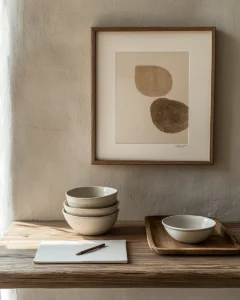
- Ceramic and stoneware objects — a simple bowl, a mug left on a table, a vase without anything in it — add handmade warmth without complexity
- Artwork with warm tones — abstract prints, landscape photography, or simple line drawings in warm frames ground the walls
- Wooden accents wherever possible — a cutting board on a counter, a tray on a coffee table, a small stool used as a side table
- Natural fiber cushion covers that you rotate seasonally — heavier knits in autumn and winter, lighter linens in spring and summer
These touches aren’t decorations for decoration’s sake. They’re functional objects that happen to be beautiful — which is exactly the philosophy this style lives by.
Conclusion: Less Is Warmer Than You Think
A minimal warm apartment with soft textures proves that restraint doesn’t mean sacrifice. When you choose thoughtfully — the right tones, the right fabrics, the right light — you create a space that feels more generous, not less. More welcoming, more alive, more you.
Start with one room. Swap one cold element for a warm one. Add one soft texture. The cumulative effect builds faster than you’d expect, and before long your apartment won’t just look beautiful — it’ll feel like home every time you walk through the door.
