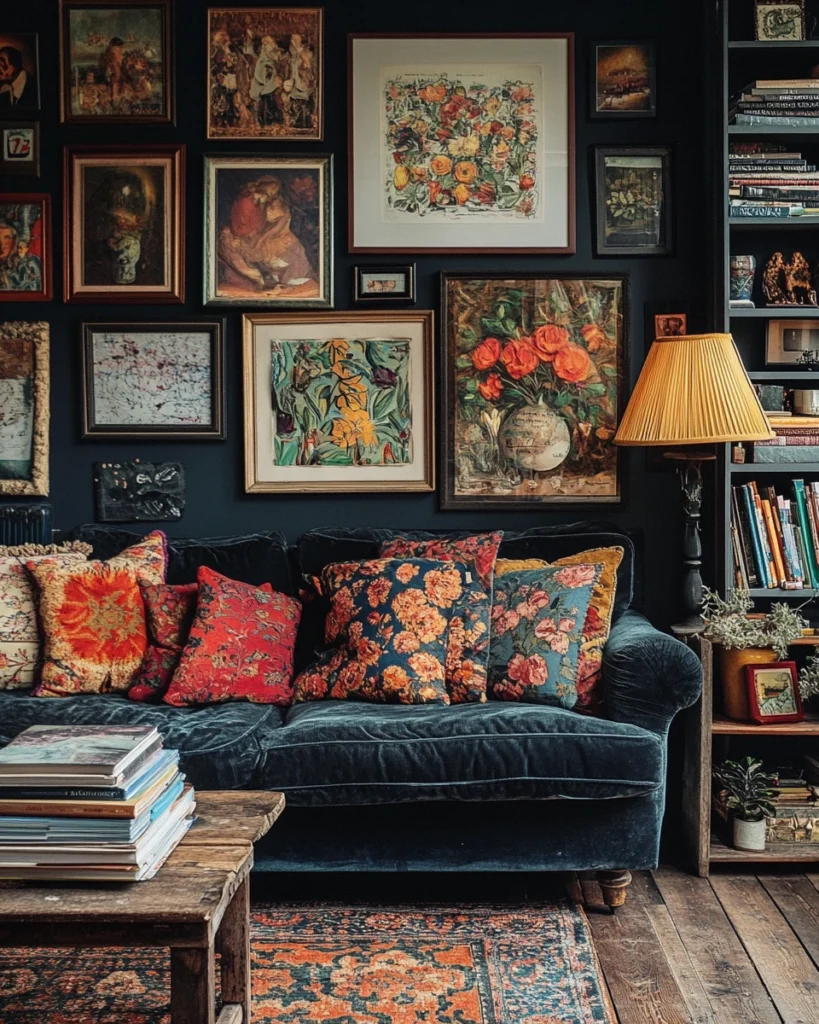
There’s a certain kind of apartment that stops you in your tracks the moment you walk in. It’s not perfectly coordinated. It’s not sparse or neutral. It’s loud, layered, deeply personal — and somehow, it all works. That’s the indie maximalist aesthetic in a nutshell: more of everything you love, styled with intention rather than restraint.
If you’ve ever felt like minimalism was slowly suffocating your personality, this style was made for you. Indie maximalism is the antidote to beige — it’s about surrounding yourself with art, textures, thrifted finds, bold color, and every object that tells a story.
Here’s how to pull it off without making your apartment feel chaotic.
What Is the Indie Maximalist Aesthetic?
Indie maximalism sits at the intersection of bohemian, vintage, and alternative aesthetics. It borrows the layering philosophy of maximalism — more is more — and filters it through an indie lens that favors authenticity over trend-chasing.
The key difference from standard maximalism? It’s not about luxury or excess for its own sake. It’s about curation with character. Every object in an indie maximalist space should feel chosen, not purchased in bulk from a chain store.
Think:
- Thrifted velvet armchairs next to a record player
- Gallery walls that mix oil paintings, concert posters, and vintage photographs
- Mismatched lamps that all somehow glow the same warm amber
- Bookshelves so packed they become a design feature on their own
Start With a Moody, Saturated Color Palette
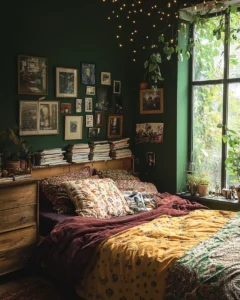
Color is where indie maximalism announces itself. Forget white walls — this aesthetic leans hard into deep, saturated tones that create a sense of intimacy and drama.
Best Wall Colors for the Look
- Forest green — moody, warm, pairs with almost everything
- Burgundy or oxblood — rich and vintage-feeling without being overwhelming
- Midnight navy — especially striking in living rooms and bedrooms
- Warm terracotta — earthy and layered, perfect for eclectic collections
You don’t have to paint every wall dark. A single accent wall behind your bed or sofa is enough to anchor the space. Pair it with warm artificial lighting — Edison bulbs, vintage floor lamps, and layered string lights — to keep it cozy rather than cave-like.
The Art of the Gallery Wall
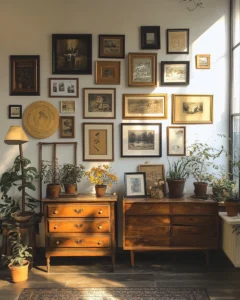
No element defines an indie maximalist apartment more than the gallery wall. The rules here are simple: there are no rules. Mix frame sizes, materials, and artwork styles until the wall feels like a visual autobiography.
What to Hang
- Vintage posters — band tours, old films, retro travel prints
- Thrifted paintings — landscapes, portraits, and abstracts from secondhand shops
- Film photography — your own or found at flea markets
- Textile art — woven wall hangings, embroidered pieces, tapestries
- Pages from books and zines — literary quotes, illustrations, handwritten notes
Arrange pieces on the floor first before nailing anything. Leave some gaps between frames, let clusters form naturally, and resist the urge to make it perfectly symmetrical. The slightly imperfect arrangement is what makes it look curated rather than corporate.
Layer Your Textiles Like You Mean It
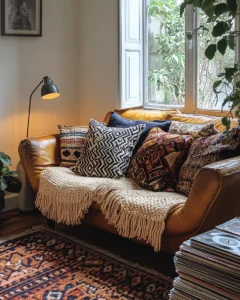
Textiles are the warmth layer of any maximalist space. In an indie apartment, that means piling on textures without worrying whether they all “match” — because in this aesthetic, contrast is the point.
How to Layer Rugs and Textiles
- Start with a large base rug — jute, sisal, or a simple flat-weave works well
- Layer a smaller patterned rug on top — Persian, Moroccan, or kilim styles are ideal
- Throw blankets everywhere — draped over sofas, folded on chairs, piled in baskets
- Mix pillow patterns freely — stripes with florals, solids with geometric prints
The goal is to make the apartment feel like it’s been lived in for years, not assembled over a weekend. Worn edges, mismatched sets, and inherited fabrics only add to the charm.
Furniture: Thrifted, Mismatched, and Full of History
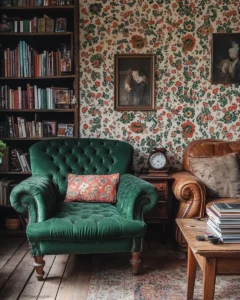
This is not the aesthetic for flat-pack uniformity. Indie maximalism thrives on furniture that has a past — pieces that came from thrift stores, estate sales, vintage markets, or hand-me-downs with actual stories attached.
Key Furniture Pieces to Look For
- Velvet sofas or armchairs in jewel tones — emerald, cobalt, plum
- Mid-century wooden pieces — sideboards, dressers, and side tables with tapered legs
- Mismatched dining chairs — no two need to be the same
- Overstuffed bookshelves — floor-to-ceiling if possible, packed and imperfect
Mixing periods and styles is not just allowed — it’s encouraged. A Victorian-style armchair next to a 1970s side table next to a modern desk lamp is exactly the kind of layered tension that makes the look work.
Books as Decor: Stack, Display, and Repeat
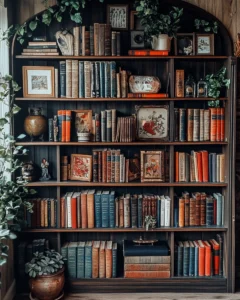
In an indie maximalist apartment, books are not tucked away. They’re displayed front and center, stacked on coffee tables, piled on nightstands, organized by color on shelves, and used as pedestals for other objects.
A bookshelf in this aesthetic is never just a bookshelf — it’s a collection of personalities, interests, and decades of reading stacked into a single visual statement. Don’t organize too neatly. Let paperbacks lean against hardcovers. Let small objects sit between stacks. Let it breathe just enough to avoid looking sterile.
Vintage and Thrift Store Finds: The Soul of the Style
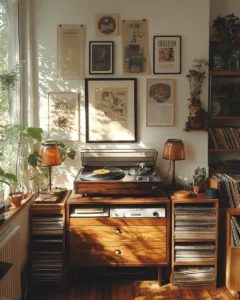
The thrift store is your best friend. Indie maximalism depends on objects that feel discovered, not purchased — items that carry aesthetic weight because they’ve existed somewhere else before they landed in your home.
What to Hunt For
- Vintage record players and vinyl collections — functional and deeply atmospheric
- Old clocks, globes, and maps — travel and time as recurring visual themes
- Ceramic and pottery — imperfect, handmade, artisan-feeling pieces
- Antique mirrors — ornate frames in tarnished gold or dark wood
- Film cameras, old typewriters, vintage radios — objects that look like props from another era
The key is to display these pieces intentionally. Group similar objects together in small clusters — what interior stylists call “vignettes” — rather than scattering them randomly across every surface.
Lighting: Warm, Layered, and Never Overhead
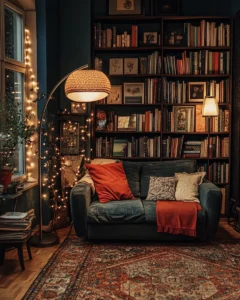
Overhead lighting is the enemy of indie maximalist vibes. Flat, bright ceiling lights flatten the depth and texture you’ve worked so hard to create. Instead, build a layered lighting setup using multiple sources at different heights.
- Arc floor lamps in corners — tall, architectural, warm-toned bulbs
- Table lamps on mismatched bases — ceramic, brass, wood, or vintage glass
- String lights along shelves or walls — soft and ambient, not festive
- Edison bulbs wherever possible — warm 2700K output is non-negotiable
Good lighting doesn’t illuminate the room — it reveals it slowly, casting shadows that make the layered textures and collections feel even more intentional.
Conclusion: More Is More When More Means You
Indie maximalism is ultimately a rejection of the idea that your apartment should look like anyone else’s. It’s permission to collect the things that genuinely move you, display them without apology, and build a space that functions as a full self-portrait.
Start with one bold wall color. Add one gallery cluster. Bring in one thrifted velvet chair. Layer one rug on top of another. The style builds on itself naturally — and the more personal the pieces, the better it looks. This is the rare design aesthetic where your weird, specific tastes are not a liability. They’re the whole point.
