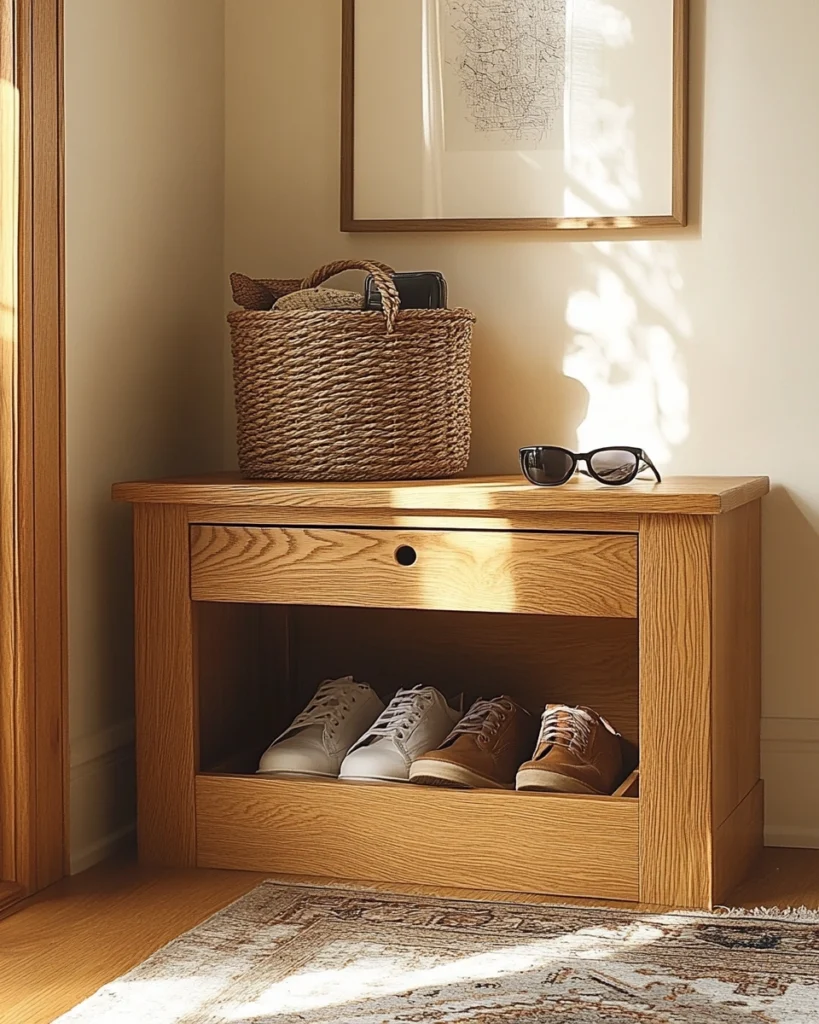
Walking into a cluttered entryway sets the tone for your entire home — and not in a good way. When you’re working with a small apartment, that first few square feet near the front door can easily become a dumping ground for shoes, bags, mail, and jackets. The good news? You don’t need a mudroom or a grand foyer to create an entryway that feels put-together. With the right furniture, storage systems, and styling choices, even the tightest entry hall can feel intentional and organized.
Start With a Slim Console Table or Entryway Bench
The backbone of any organized small entryway is a single piece of furniture that works hard. A slim console table (under 12 inches deep) or a narrow storage bench gives you a surface to drop your keys, phone, and essentials without eating up floor space.
Look for pieces with built-in storage underneath — either open cubbies for shoes or a hinged lid bench that hides clutter inside. Avoid chunky or ornate furniture; clean lines keep the space from feeling visually heavy.
Best materials for small entryways:
- Light wood tones (oak, ash, pine) to keep the space feeling open
- White or black painted MDF for a modern, sharp look
- Rattan or woven frames for texture without visual weight
Use Vertical Wall Space Aggressively
In a small entryway, the floor is precious — so go up. Mounting hooks, shelves, and organizers on the wall keeps the floor clear and makes the entire area feel more intentional.
A wall-mounted coat rack with 4–6 hooks handles jackets, bags, umbrellas, and hats without taking up any floor real estate. Place it at a practical height: around 60–66 inches from the floor for coats, with a lower row of hooks at 48 inches if you hang bags or kids’ items.
Floating Shelves Above the Console
If you have a console table, add a floating shelf 12–16 inches above it. This creates a layered vignette and gives you a dedicated spot for a small tray, a candle, or a framed photo — keeping the console surface itself cleaner.
Pegboards and Modular Wall Systems
A small pegboard (even 18″ x 24″) painted in a matching wall color turns into a barely-there organizer. Use it to hang keys, sunglasses, a small mail holder, and even charging cables. It looks designed rather than chaotic.
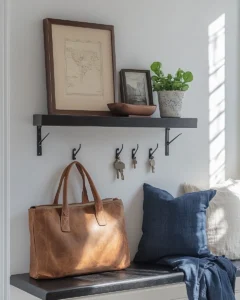
Solve the Shoe Problem First
Shoes are the number one source of entryway chaos. Without a dedicated spot, they pile up near the door and make the whole space feel neglected.
For a small apartment, your best options are:
- A shoe bench with cubbies — seats 2 while storing 3–4 pairs underneath
- A wall-mounted shoe rack — completely off the floor, holds 8–10 pairs in a narrow vertical strip
- A small shoe cabinet — looks like furniture, hides everything inside; choose one under 10 inches deep
- An open low shelf — keeps just today’s most-used pairs accessible while everything else stays in the closet
The rule of thumb: only store the shoes you wear weekly in the entryway. Everything else belongs in the closet.
Add a Mirror to Expand the Space Visually
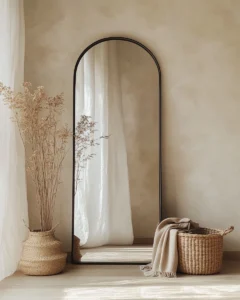
A mirror in the entryway serves double duty: it makes the space feel significantly larger and gives you a last-look station before heading out. Choose one that fits the scale of your entryway — a tall leaning mirror works beautifully in narrow hallways, while a round or arch-shaped wall mirror adds character without overwhelming.
Mirror Placement Tips
- Lean it against the wall if you can’t mount anything — no holes required
- Hang it opposite a window to bounce natural light through the space
- Choose dark or warm-toned frames (black, walnut, brass) for a grounded, sophisticated look
- Go vertical in narrow hallways — tall mirrors elongate the space more effectively than wide ones
Use Trays and Baskets to Corral Small Items
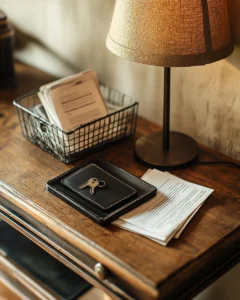
The real enemy of an organized entryway isn’t a lack of storage — it’s small random items with nowhere to go. Keys, sunglasses, lip balm, coins, AirPods. Without a landing zone, these items scatter across every surface.
The solution is simple: give every category of small item one dedicated container.
- A small ceramic or leather tray on the console for keys, coins, and cards
- A shallow basket or wire bin for mail and documents
- A fabric bin or small box under the bench for reusable bags
When everything has a home, the entryway tidies up in 30 seconds flat.
Choose a Cohesive Color Scheme
A small entryway that feels chaotic is often one that lacks visual continuity. You don’t need to match everything perfectly, but choosing 2–3 colors and sticking to them makes the space feel curated rather than thrown together.
Color combinations that work well in small entryways:
- White walls + warm wood + black metal accents — clean and modern
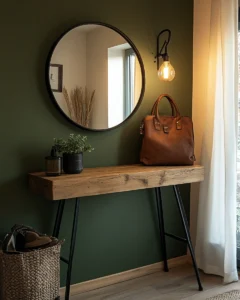
- Deep green or navy wall + natural rattan + brass hardware — rich and welcoming
- Greige walls + terracotta + cream textiles — warm and earthy
- White + warm gray + oak — timeless and soft
Paint the entryway wall a different shade than the rest of your apartment if you want to define the zone without building a wall. Even a semi-gloss or deep matte on one accent wall makes the entry feel like its own intentional space.
Lighting Makes or Breaks a Small Entryway
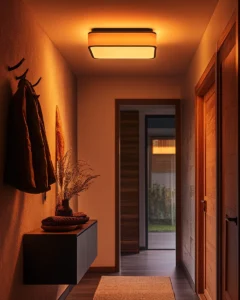
Most apartment entryways have zero natural light and rely on a single overhead ceiling fixture — usually a builder-grade flush mount that flatters no one. Upgrading the light source is one of the highest-impact changes you can make.
If you can’t swap the ceiling fixture, layer in additional light sources:
- A small plug-in sconce mounted on the wall adds warmth and verticality
- A rechargeable table lamp on the console creates an inviting glow
- A motion-activated LED strip under a floating shelf adds practical and ambient light simultaneously
Warm white bulbs (2700K–3000K) make any entryway feel instantly more welcoming versus the harsh blue-white of daylight bulbs.
Final Thoughts
A small apartment entryway doesn’t need square footage to feel organized — it needs intention. Start with one sturdy piece of furniture, mount hooks at the right height, solve the shoe situation, and give every small item a dedicated landing zone. Layer in a mirror for depth, choose a cohesive palette, and upgrade your lighting.
The result is an entryway that greets you with calm instead of chaos — and sets the right tone for everything inside.
