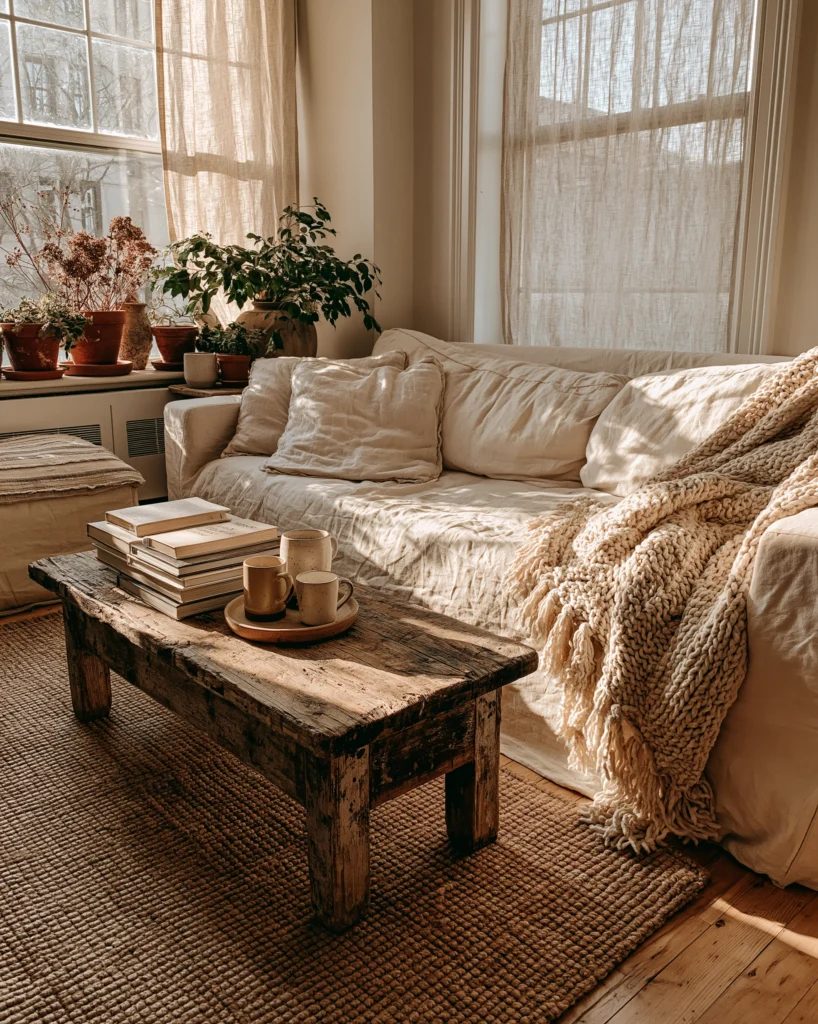
If you’ve ever scrolled through Pinterest and felt a deep pull toward linen curtains, wooden bowls, and rooms that feel like a quiet Sunday morning — welcome to cottagecore. But here’s the thing: you don’t need a countryside farmhouse to live this aesthetic. A city apartment, layered with earthy textures and warm, grounded tones, can feel just as soulful — and even more livable.
This guide is your roadmap to building a cottagecore apartment that feels genuinely cozy, not costume-y. No fake rurality required. Just honest materials, honest colors, and rooms that breathe.
What Is Cottagecore, Really?
Cottagecore is a design philosophy rooted in slowness. It draws from English countryside cottages, old farmhouses, and pre-industrial home life — but distilled into a modern, apartment-friendly aesthetic that anyone can achieve.
It’s not about recreating a set from a period drama. It’s about choosing materials and details that feel warm, handmade, and time-worn. Think rough linen, hand-thrown ceramics, aged wood, woven baskets, and faded floral prints. The earthy layer approach grounds all of that in nature’s own color palette — soil, stone, moss, bark, cream, and clay.
Building Your Earthy Color Palette
The foundation of a cottagecore apartment with earthy layers starts with color. Forget bright whites and stark grays — this palette is warm, muted, and drawn straight from the ground.
Core Earthy Tones to Work With:
- Warm cream and aged ivory — for walls, linens, and larger furniture pieces
- Terracotta and dusty clay — for accent cushions, ceramics, and small furniture
- Mushroom brown and chestnut — for wood tones, leather, and textiles
- Sage and dried herb green — for subtle pops of color without going full botanical
- Stone gray and raw linen beige — as neutral grounding tones throughout
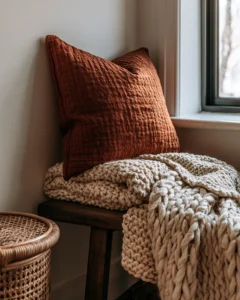
Layer these colors the way nature does — nothing too perfectly matched, just organically harmonious. A terracotta cushion next to a cream throw on a chestnut wood bench? That’s the vibe.
Furniture: Aged, Honest, and Imperfect
Cottagecore furniture tells a story. It’s not showroom-perfect — it’s the kind of piece that looks like it’s been in the family for decades, or found at a local antique market on a rainy Saturday.
What to Look For
Natural wood with visible grain is your best friend. Look for oak, pine, walnut, or reclaimed wood in darker, honeyed tones. Distressed finishes and visible knots only add to the charm.
Curved and soft silhouettes work beautifully here — a rounded armchair in aged velvet, a tulip-shaped side table, a small loveseat with cabriole legs. Cottagecore doesn’t do sharp corners or industrial lines.
Cane and rattan are cottagecore mainstays. A cane-back chair, a rattan headboard, or a wicker side table instantly reads as warm and handcrafted.
Thrift and Vintage First
Before buying new, explore second-hand. Flea markets, Facebook Marketplace, and vintage shops often carry exactly the worn-in pieces that make a cottagecore space feel authentic. A slightly chipped wooden dresser or a faded upholstered ottoman will outperform anything fresh off a factory floor.
Textiles: Where the Layers Actually Happen
If earthy color is the backbone, textiles are the heart of a cottagecore apartment. This is where your space stops looking like a mood board and starts feeling like a real home.
The Key Fabrics
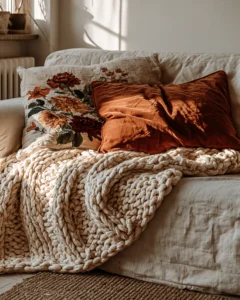
- Linen — in every room, in every form. Linen curtains, linen pillow covers, linen tablecloths. It wrinkles beautifully and softens with every wash.
- Chunky knit wool — throws and cushion covers in cream, oatmeal, or warm brown. Draped loosely, never folded precisely.
- Velvet — in deep earthy tones like rust, forest, or plum. A single velvet cushion or armchair adds richness without heaviness.
- Woven cotton — for rugs, blankets, and curtain panels. Irregular weaves and slub textures are ideal.
- Embroidered linen — floral or botanical embroidery on cushions or napkins adds a hand-crafted, heirloom quality.
Layering Without Chaos
The trick is contrast in texture, not color. Keep your palette cohesive (cream, terracotta, brown) but mix the textures freely — smooth linen next to chunky knit next to woven jute. That juxtaposition is what creates depth and warmth.
Kitchen and Dining: The Soul of the Cottagecore Home
In cottagecore, the kitchen and dining area carry enormous emotional weight. These are the spaces that feel most connected to nourishment, community, and slow living.
Kitchen Details That Matter
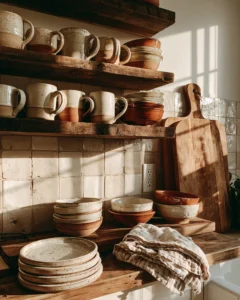
Open shelving beats upper cabinets in a cottagecore kitchen. Display mismatched ceramic mugs, hand-thrown bowls, wooden spoons, and cloth napkins folded loosely. It should look curated but casual — not a showroom.
Handmade ceramics are non-negotiable. Replace your matching dishware with an assortment of stoneware in cream, sage, brown, and terracotta. The slight irregularities in handmade pieces are exactly what you want.
Wooden cutting boards and utensils add organic texture to countertops. A few aged wooden boards leaned against the backsplash, a wooden mortar, a bread box — these details tell the story.
The Dining Table Moment
A worn farmhouse table — real wood, slightly scratched — is the dream. If you’re working with a small apartment dining area, even a small round wooden table dressed with a linen runner, mismatched chairs, and a cluster of stoneware makes the space feel deeply cottagecore.
Bedroom: A Nest of Earthy Warmth
The cottagecore bedroom should feel like you’re burrowing in — protected, soft, and completely unhurried.
Bedding That Feels Like a Hug
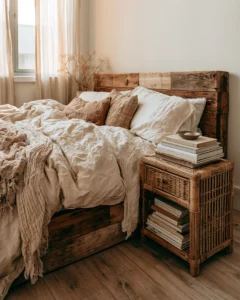
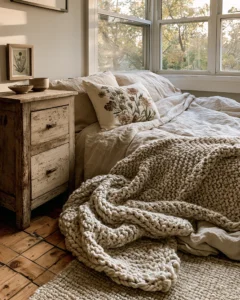
Layer your bed the way you’d layer a cozy outfit. Start with a fitted sheet in warm white or cream, add a linen duvet cover in oatmeal or aged ivory, then pile on a knit throw, a faded quilt, and an assortment of linen and embroidered cushions. Mix textures and subtle tones — nothing needs to match perfectly.
Walls and Small Accents
Hang pressed botanical prints or watercolor nature artwork in mismatched frames above the bed or along a gallery wall. Antique mirrors, aged-frame artwork, and hand-stitched samplers all work beautifully. A woven wall hanging in neutral tones adds texture without clutter.
Wooden furniture in the bedroom should lean warm — walnut, chestnut, or pine. A simple wooden dresser with ceramic knobs, a carved wooden mirror frame, a small spindle-leg bedside table.
Small Apartment Tricks for the Cottagecore Look
Living in a compact apartment doesn’t limit you — it actually forces a more intentional, curated version of the aesthetic.
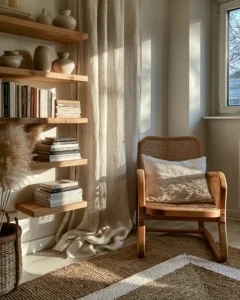
- Use vertical space: Floating wooden shelves stacked with books, ceramics, and textile rolls feel rich without eating floor space.
- Choose multi-purpose furniture with character: An antique trunk as a coffee table, a wooden ladder shelf as a display unit, a vintage cane chair that doubles as a reading nook.
- Embrace imperfect walls: Peel-and-stick wallpaper in botanical or ticking-stripe patterns can transform a rental bedroom or accent wall.
- Layer rugs: Place a smaller woven rug over a larger jute rug to define a reading corner or sitting area.
- Curtains floor to ceiling: Even on small windows, floor-length linen curtains make a room feel taller and more romantic.
Conclusion: Earthy Layers, Genuine Comfort
Cottagecore isn’t a trend you buy all at once — it’s a sensibility you build slowly, piece by piece, choosing things that feel honest and warm. An earthy palette, honest materials, layered textiles, and a few beautifully imperfect objects are all you really need.
Start with one room. Swap your synthetic throw for a linen one. Bring in a wooden bowl. Hang a faded botanical print. Each small decision layers onto the next, and before long, your apartment stops feeling like a unit and starts feeling like a home.
That quiet, grounded feeling? That’s cottagecore done right.
