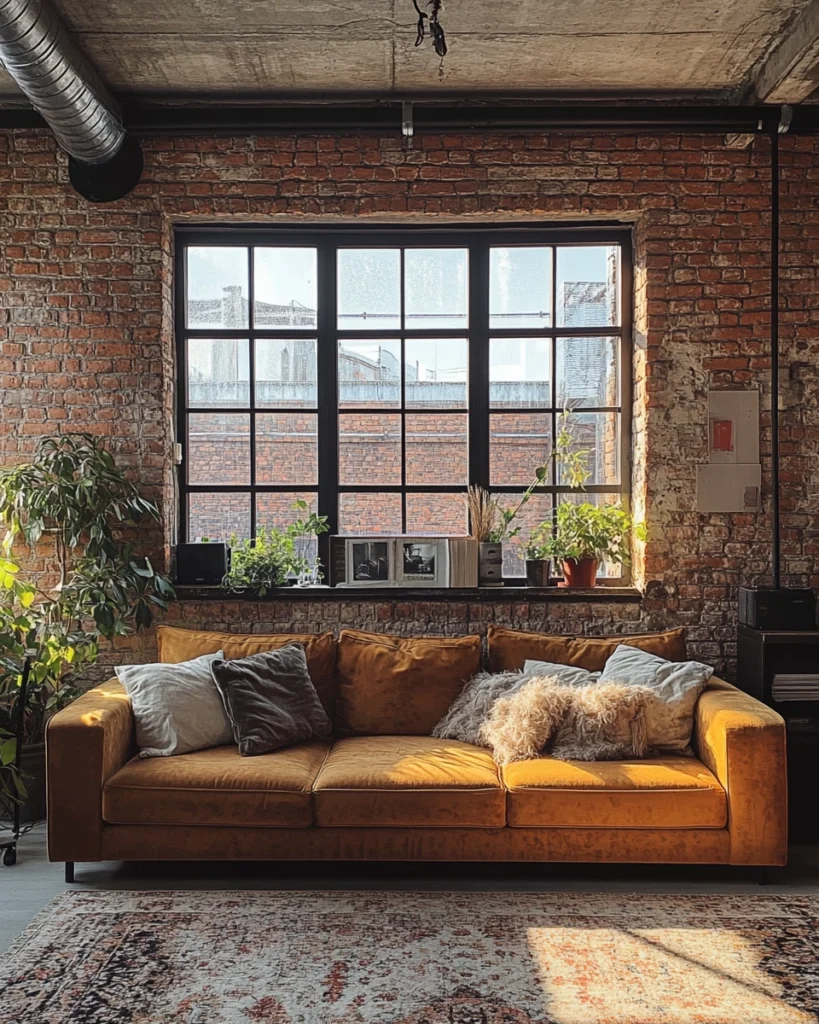
Loft Apartment With Cozy Urban Charm
There’s something undeniably magnetic about a loft apartment. The soaring ceilings, the exposed brick, the open floor plan that dares you to make it your own — it’s a canvas that blends industrial grit with personal warmth in a way few other spaces can. But creating a cozy, livable loft isn’t just about throwing a few throw pillows on a couch and calling it done. It takes intention, layering, and a real understanding of how to balance rawness with comfort.
Whether you’re moving into your first loft or finally ready to transform your current space, this guide is packed with practical styling tips to help you build a loft apartment with genuine urban charm.
Embrace the Industrial Bones — Don’t Fight Them
The defining features of most loft apartments — exposed brick, visible ductwork, polished concrete floors, steel-framed windows — are assets, not flaws. Many people make the mistake of trying to soften or hide them. Instead, lean in.
- Exposed brick works beautifully as a natural accent wall. Let it breathe. Mount a large piece of abstract art against it or leave it bare to anchor the room.
- Visible pipes and ductwork look intentional when your furniture and fixtures echo them. Matte black metal legs on tables, black pipe-style shelving, and Edison-style filament bulbs all nod to the industrial context without trying too hard.
- Concrete floors pair well with layered rugs — think woven wool, distressed Persian-style patterns, or thick jute in overlapping zones.
The key is cohesion. When your chosen decor speaks the same language as the architecture, everything feels curated instead of chaotic.
Zone Your Open Floor Plan With Purpose
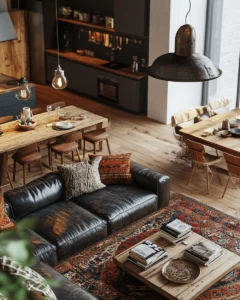
One of the biggest challenges in a loft is the lack of walls. You have one massive room and you need it to function as a living room, dining area, bedroom, and possibly a home office — all without feeling like an airport lounge.
Use Furniture as Room Dividers
A sofa placed with its back to the dining zone is one of the oldest tricks in the book, and it still works. A console table behind the couch adds both visual separation and a surface for lamps and decorative objects.
Open shelving units — especially in dark metal or reclaimed wood — create defined zones while keeping the space visually open. They’re functional and structural at the same time.
Define Each Zone With Rugs
Rugs are your invisible walls. A chunky wool rug under the living room seating instantly creates a “room within a room.” A smaller geometric rug under the dining table does the same. This zoning technique is both practical and cozy — it makes each area feel deliberate and intimate.
Overhead Lighting as Zone Markers
A pendant light hung low over the dining table signals that space as its own zone. A floor lamp arching over the reading chair does the same. Layer your lighting rather than relying on a single overhead fixture — it’s one of the most impactful moves you can make in a loft.
Choose Furniture That Earns Its Place
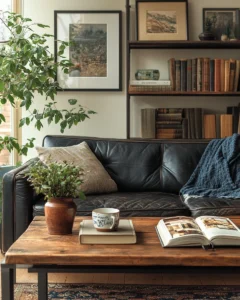
In an open loft, every piece of furniture is on display from multiple angles. There’s no hiding a bad sofa behind a wall. So choose pieces that are both beautiful and functional.
Go for Scale
Lofts have high ceilings and large square footage. Undersized furniture will look lost. A large, deep sectional sofa, an oversized coffee table, a substantial dining table with eight chairs — these fill the space properly and make it feel intentional rather than sparse.
Mix Materials Deliberately
The best loft aesthetics combine:
- Reclaimed or dark walnut wood for warmth
- Matte black or brushed steel metal for urban edge
- Leather or linen upholstery for comfort and longevity
- Concrete, stone, or marble accents to echo the architecture
Avoid matching everything too closely. A worn leather sofa next to a raw-edge wooden shelf next to a cast iron coffee table creates visual richness that feels collected over time, not ordered from a catalog.
Master the Art of Cozy Layering
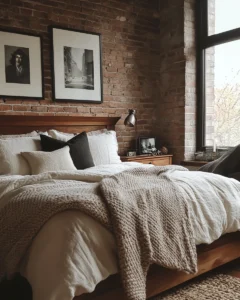
Coziness in a loft doesn’t come automatically — you have to build it. The secret is layering: textiles, light, and objects working together to warm up the raw architecture.
Textiles Are Everything
Lofts can feel cold and echoey. Soft furnishings are your acoustic and visual fix:
- Throw blankets draped over sofas and chairs soften edges
- Velvet or linen cushions in deep, rich tones — burnt orange, forest green, navy, terracotta — add color without overwhelming
- Curtains hung high and wide make ceilings feel even taller and windows more dramatic. Go heavy — linen blends, velvet panels, or blackout drapes in charcoal or deep taupe
Layer Your Rugs
Don’t be afraid to stack rugs. A vintage Persian layered over a natural jute brings warmth, texture, and color to a concrete floor. It also helps reduce echo in high-ceiling spaces.
Build a Gallery Wall That Tells Your Story
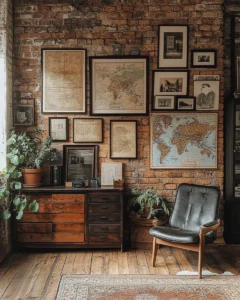
A gallery wall on an exposed brick backdrop is one of the most striking things you can do in a loft. It personalizes the space immediately and fills vertical real estate that’s often left bare.
Mix your frames — black metal, raw wood, thin brass — and vary your content: black and white photography, abstract prints, vintage maps, hand-lettered quotes, framed textile samples. The rule isn’t symmetry; it’s cohesion through color or theme.
Lean some frames on shelves or the floor for that casual, layered look rather than nailing everything to the wall in a grid.
Smart Storage That Looks Good
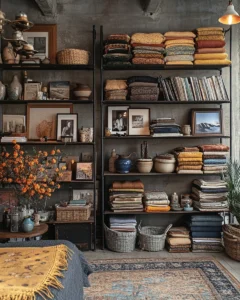
Storage is the unglamorous backbone of loft living. Without proper storage, open floor plans descend into clutter fast.
Open Shelving Done Right
Open shelving is a staple of loft design — but it requires curation. Group books by color or size, mix in framed photos, small sculptures, and folded textiles. Every shelf should look considered, not dumped.
Hidden Storage in Plain Sight
- Storage ottomans double as coffee tables and seating
- Bed frames with drawers handle bedroom overflow
- Sideboards and credenzas in the dining zone hold linens and kitchenware
- Baskets and bins on lower shelves keep everyday items accessible but contained
The Lighting Blueprint for a Loft
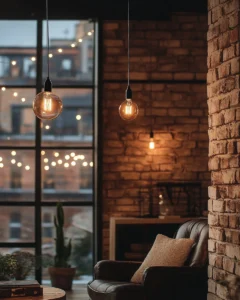
Lighting in a loft is not a single decision — it’s a system. Because the ceiling is high and the space is large, you need multiple light sources at different heights to create warmth and intimacy.
Your lighting blueprint should include:
- Ambient — industrial-style pendant lights or track lighting for general illumination
- Task — desk lamps, reading lamps positioned for function
- Accent — LED strip lighting under shelving, picture lights above art, warm string lights draped across beams
Dimmer switches are non-negotiable in a loft. The ability to dial down the overhead light in the evening transforms the mood entirely.
Conclusion: Make Your Loft Feel Like Home
A loft apartment with cozy urban charm isn’t built in a day — it’s built intentionally, piece by piece. Start with the bones: embrace the exposed brick, the concrete, the steel. Layer in warmth with textiles, rugs, and mixed-material furniture. Zone your space with purpose, fill your walls with meaning, and build a lighting system that flatters every corner.
The goal isn’t a showroom. It’s a space that feels like you — raw and refined, lived-in and loved. That tension between industrial and cozy is exactly what makes a loft apartment one of the most compelling places to call home.
